

A desk and a chair may share your brand name, but they create different sourcing risks. A sit-stand desk combines a frame, lifting system, tabletop and electrical configuration. An ergonomic chair combines adjustment mechanisms, supporting structures and materials that need to work together for the intended users.
This guide gives procurement and brand teams a practical way to assess both programs, plan sampling and prepare for launch. For the subsequent order process, see our office furniture OEM procurement process.
BUYER'S GUIDE
Start with the product line you want to sell
A useful supplier shortlist starts with a product brief. Without one, quotations can look comparable while covering different materials, features and responsibilities.
Define your destination market, sales channel, intended users and price position. Then describe the first-order quantity, likely reorder pattern and desired warehouse-arrival window. A distributor supplying workplace projects may prioritize finish continuity and service parts. An online brand may need compact packaging, clear assembly instructions and photographs ready for product listings.
Give each desk and chair its own specification sheet. A desk brief should describe desktop dimensions, required height range, usable equipment load and regional power requirements. A chair brief should describe user fit, essential adjustments, materials and service expectations. Leave uncertain details open, but identify who must resolve them.
Also separate must-have requirements from optional differentiation. Changing a carton graphic is not the same development task as changing a lifting column or chair mechanism. Ask each supplier to identify what it can offer from an existing platform and what requires engineering, tooling or additional validation.
BUYER'S GUIDE
Define the OEM/ODM relationship before discussing exclusivity
Private label describes selling a product under your brand. It does not, by itself, explain who created the design or who owns it.
An existing-platform program can adapt approved colors, accessories, branding and packaging. An ODM relationship usually involves the manufacturer contributing design or development work. An OEM project commonly involves manufacturing to buyer-supplied requirements or designs. Suppliers use these terms differently, so agree on the actual deliverables rather than relying on the acronym.
Before sharing sensitive files, clarify the parties to an NDA and its permitted uses. Before paying for development, agree who owns drawings, tooling and project-specific modifications. State whether you are buying ownership, a usage right or only access to a supplier platform.
A custom color or logo does not create an exclusive product. If protection matters, define the configuration, territory, channels, duration, performance conditions and exceptions in a separate written agreement. Obtain appropriate legal advice for the intended arrangement.
BUYER'S GUIDE
How to evaluate commercial furniture manufacturers beyond the showroom
A factory-direct relationship should give you access to the people and processes responsible for production. It does not mean every component is made on-site, and it does not automatically guarantee better quality.
Confirm the manufacturing scope and responsible entities
Ask which operations are performed at the site: frame cutting and welding, tabletop machining, chair assembly, inspection and packing. Ask which components or processes are purchased or subcontracted, and how they are controlled.
Review the manufacturing entity, contracting entity and payment beneficiary. A separate export company can be legitimate; the relationship should be explained and documented. An unexplained mismatch is a reason to pause, not a reason to guess.
Use an on-site visit, a focused live video tour or an appropriate independent assessment. Follow your product category through the relevant workstations. A general furniture showroom cannot establish capacity for a specific sit-stand desk system.
Put in-house R&D through a practical test
Ask to speak with the engineer responsible for your proposed configuration. Present a real question: what changes if the desktop becomes wider, the handset changes, or the chair's seat-depth mechanism is revised?
Look for a reasoned explanation of feasibility, cost, testing and timing—not an immediate yes to every request. Request appropriately redacted examples of drawings, specification revisions and sample feedback. Suppliers can protect confidential designs while still demonstrating a working development process.
A useful evaluation exercise is to trace one sample into its specification, bill of materials, production instructions and inspection criteria. Ask who can authorize a substitution. If those records cannot be connected, an impressive sample has not yet demonstrated production control.
Our how to verify an office furniture factory expands this review into legal identity, process scope and subcontracting questions.
BUYER'S GUIDE
Assess the desk as a complete system
The frame, tabletop and drive system must be compatible in the final configuration. Evaluate them together before approving a private-label standing desk.
Tabletop options: specify the construction, not just the finish
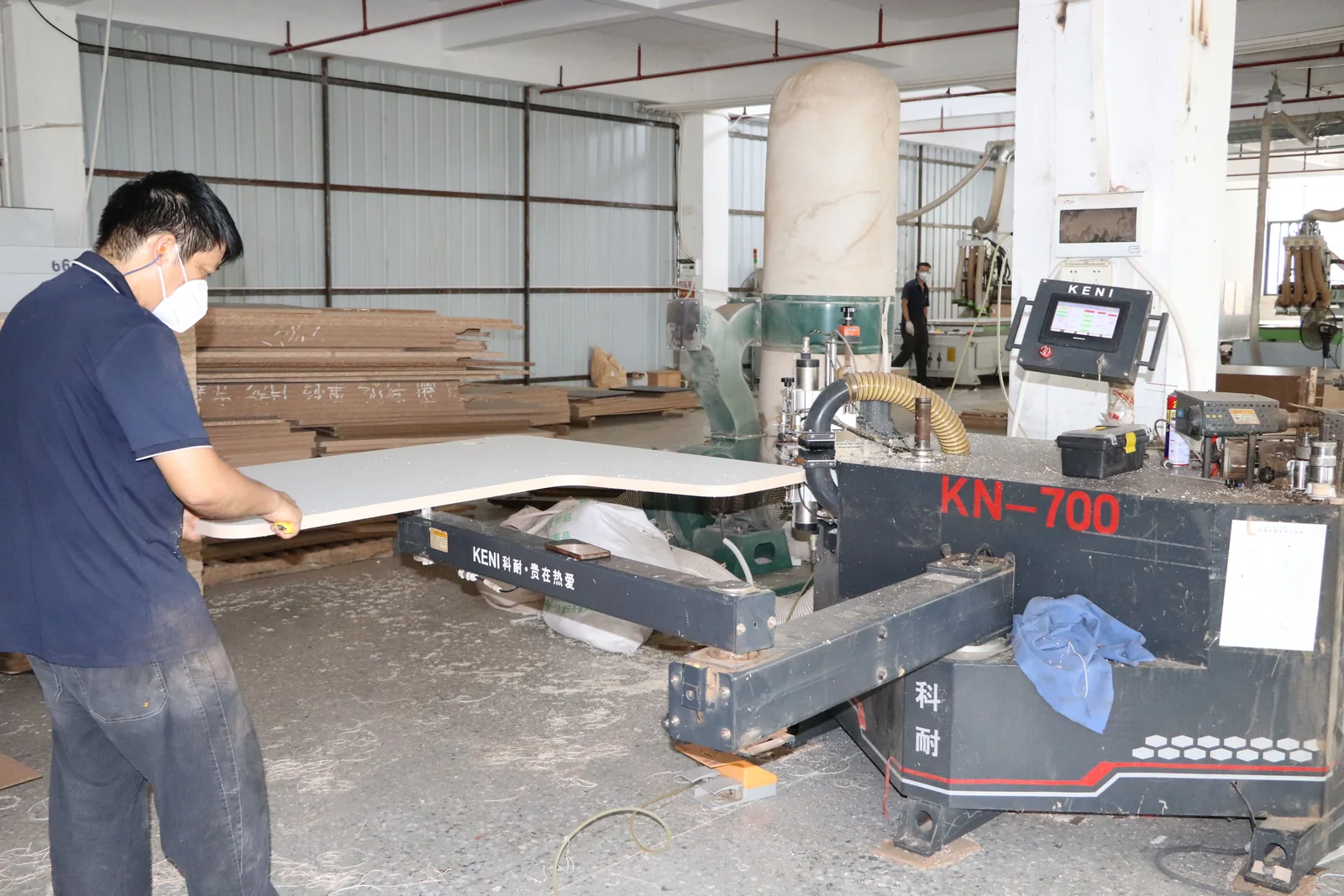
Ask for the substrate and finish to be identified separately. A wood-look finish does not tell you whether the underlying panel is particleboard, MDF, plywood or another material. Confirm thickness, edge treatment, dimensions, drilling pattern and agreed visual tolerances.
Evaluate the proposed top with the frame. Check attachment positions, supported size, overhang and any cable-management cutouts. If tabletops are sourced separately, define who owns the interface drawing and resolves fit problems.
For U.S.-bound desks using regulated composite-wood materials, review the relevant formaldehyde-emissions documentation. EPA's TSCA Title VI rules cover regulated hardwood plywood, MDF and particleboard, as well as finished goods containing those materials, subject to definitions and exclusions. A generic “eco-friendly” description is not a substitute for the applicable evidence. See EPA formaldehyde rules for composite wood products.
Motor configurations: evaluate performance, not the motor count alone
A single- or dual-motor label does not establish stability, usable load or reliability. Ask for the lifting-column configuration, control box, handset, voltage and plug options, duty cycle and replacement-part identification.
Review height range, lifting performance and noise under stated conditions. Separate static load claims from working lifting capacity. Confirm whether the quoted capacity includes the tabletop and how the load is distributed.
Check wobble at the intended working heights with the proposed desktop installed. Evaluate memory settings, reset behavior and collision-response features where offered, without treating those features as a substitute for safe use or applicable product assessment.
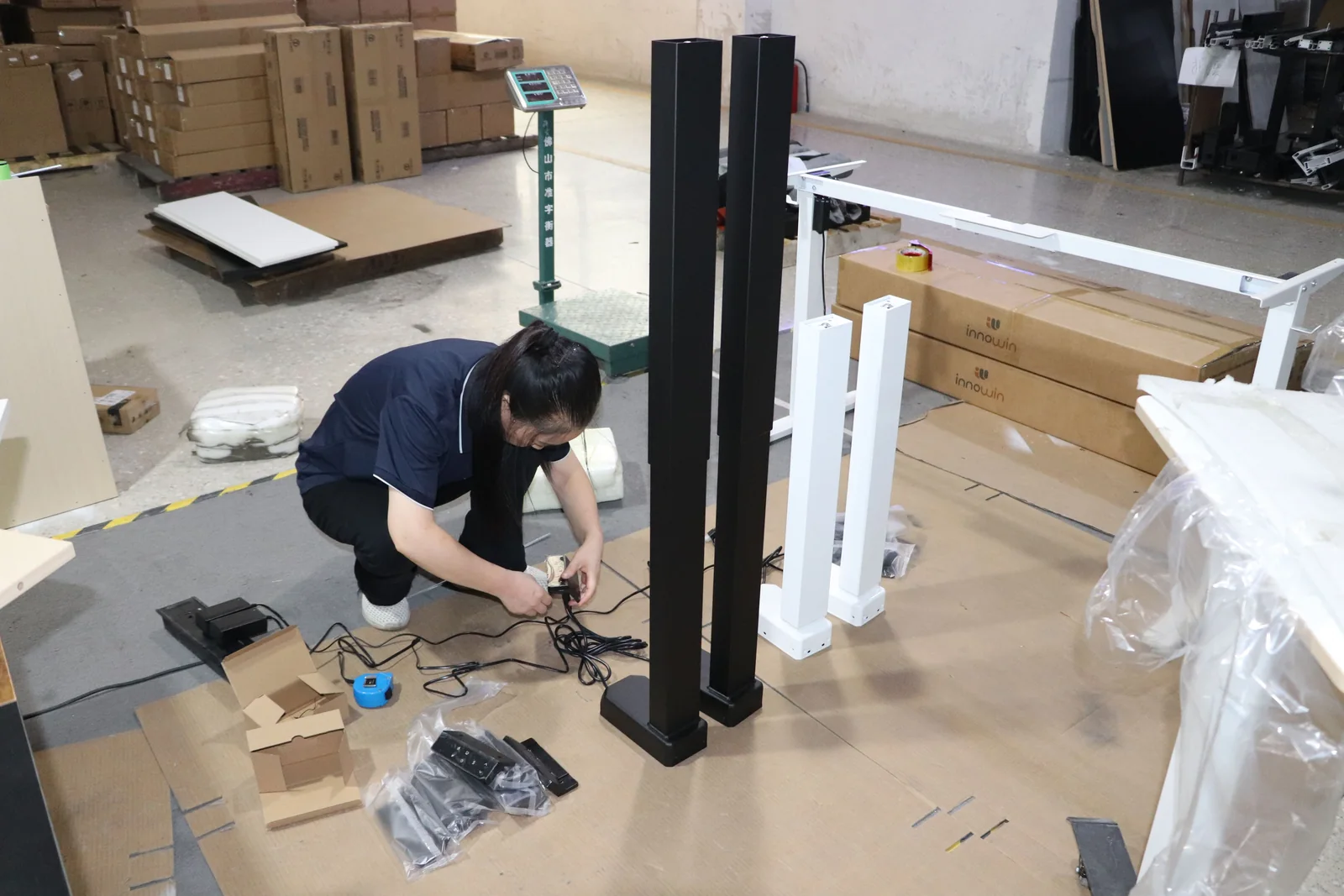
For a deeper evaluation of movement and test setup, use our standing desk frame stability checks.
BUYER'S GUIDE
Assess the chair through user fit and serviceability
An ergonomic office chair needs to fit its intended users, not merely carry a long list of adjustment names.
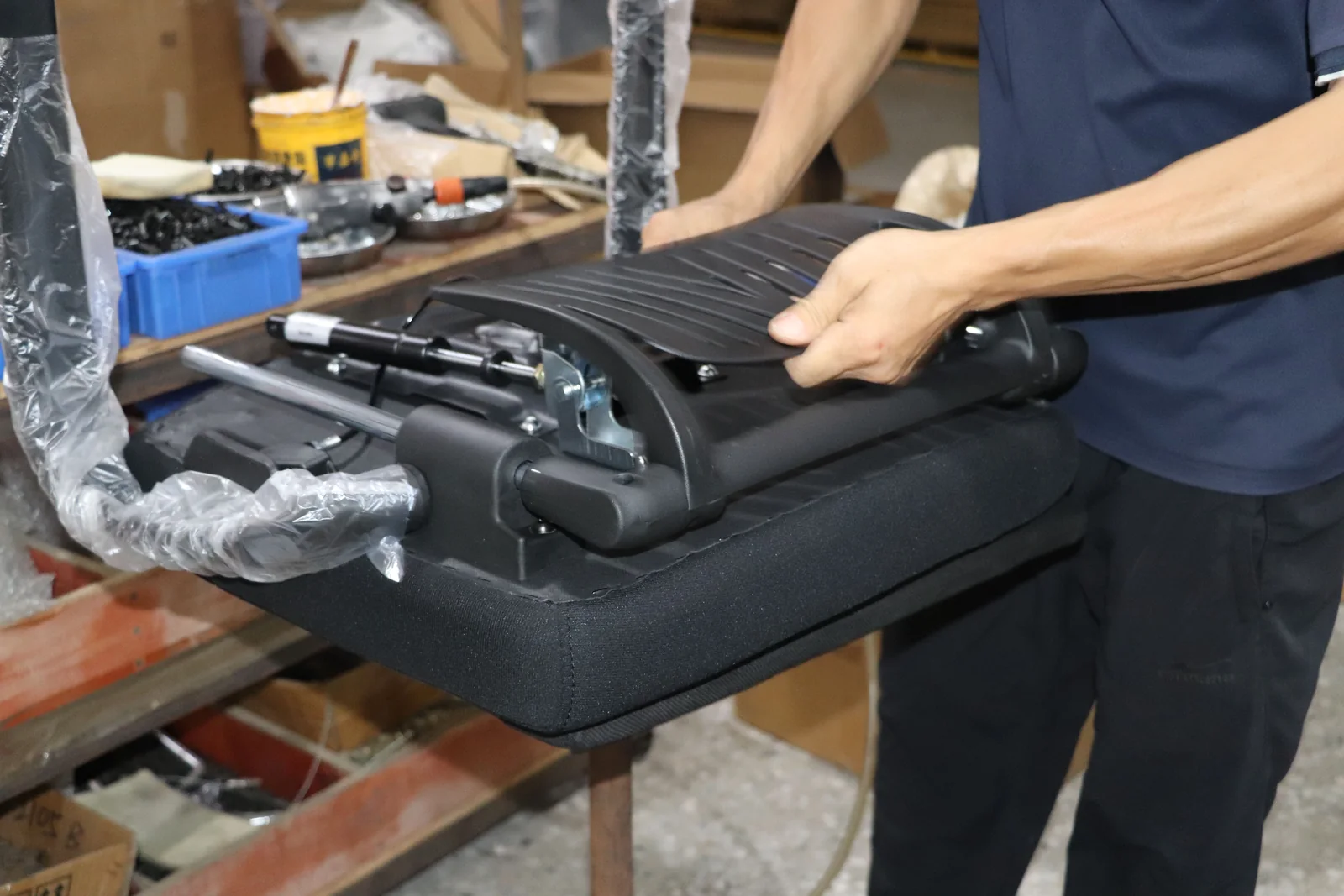
Review seat-height and seat-depth ranges, back and lumbar support, armrest movement, recline operation and access to the controls. Try the exact sample with representative users where practical. Check whether adjustments remain usable together: for example, whether the chosen armrest position works at the intended desk height.
Review the ergonomic office chair adjustment features against the users and tasks your line is intended to serve.
Identify the mechanism, gas lift, base, casters and mesh or upholstery specification. Discuss the flooring, usage pattern and care requirements. Request model-specific durability evidence separately from subjective comfort feedback; neither replaces the other.
A private-label line also needs a service plan. Confirm which components can be replaced, how they are identified and whether parts will remain compatible across repeat orders. A chair that looks distinctive but cannot be serviced may create an avoidable burden for your distributor.
BUYER'S GUIDE
Require quality evidence at each stage
A good quality plan connects incoming materials, in-process checks, final inspection and corrective action to the approved specification.
Request examples of inspection records for relevant products. Useful records identify the product version, batch, checked characteristic, result and disposition. Ask how nonconforming parts are isolated and how a corrective action is verified. “We inspect everything” is less useful than a defined method and a traceable record.
For desks, discuss dimensions, assembly, lifting function, finish and pack-out. For chairs, discuss component fit, adjustment function, finish and assembly. Agree on defect definitions and any shipment-sampling plan before production. Sampling is not a guarantee that every unit is defect-free, and it cannot replace required safety or compliance work.
Match standards and documentation to the exact product
BIFMA identifies ANSI/BIFMA X5.1 for general-purpose office and institutional seating and X5.5 for desk and table products, including height-adjustable tables. Request the relevant report, standard edition and tested configuration rather than accepting a manufacturer-wide “BIFMA certified” statement. ANSI/BIFMA seating and desk standards explain these scopes.
A report of conformance and a BIFMA Compliant registry listing are different evidence. BIFMA Compliant product verification program is a product-verification program, not a certification program; its laboratory requirements allow appropriately accredited in-house or third-party testing. An unlisted product is not automatically nonconforming.
CE marking is also not a universal furniture-quality certificate. It is required only where applicable EU rules mandate it. For an electrically powered desk or other configured product, establish the applicable requirements with a qualified compliance adviser and review the documentation accordingly. See the EU guidance on CE marking.
Build a documentation checklist for the destination market and sales channel. None of these references establishes compliance for an unspecified GB model or for every product in a supplier's catalog.
BUYER'S GUIDE
Include private-label packaging and sales-ready assets in the scope
Your brand appears on the carton, instructions and product listing—not only on the furniture. These deliverables need approval too.
Confirm carton construction, protective packing, hardware identification, label positions, barcodes and assembly instructions. Agree what transport-testing evidence is appropriate to your distribution route. Retail pallet delivery and individual parcel shipment should not be assumed to use the same packing design.
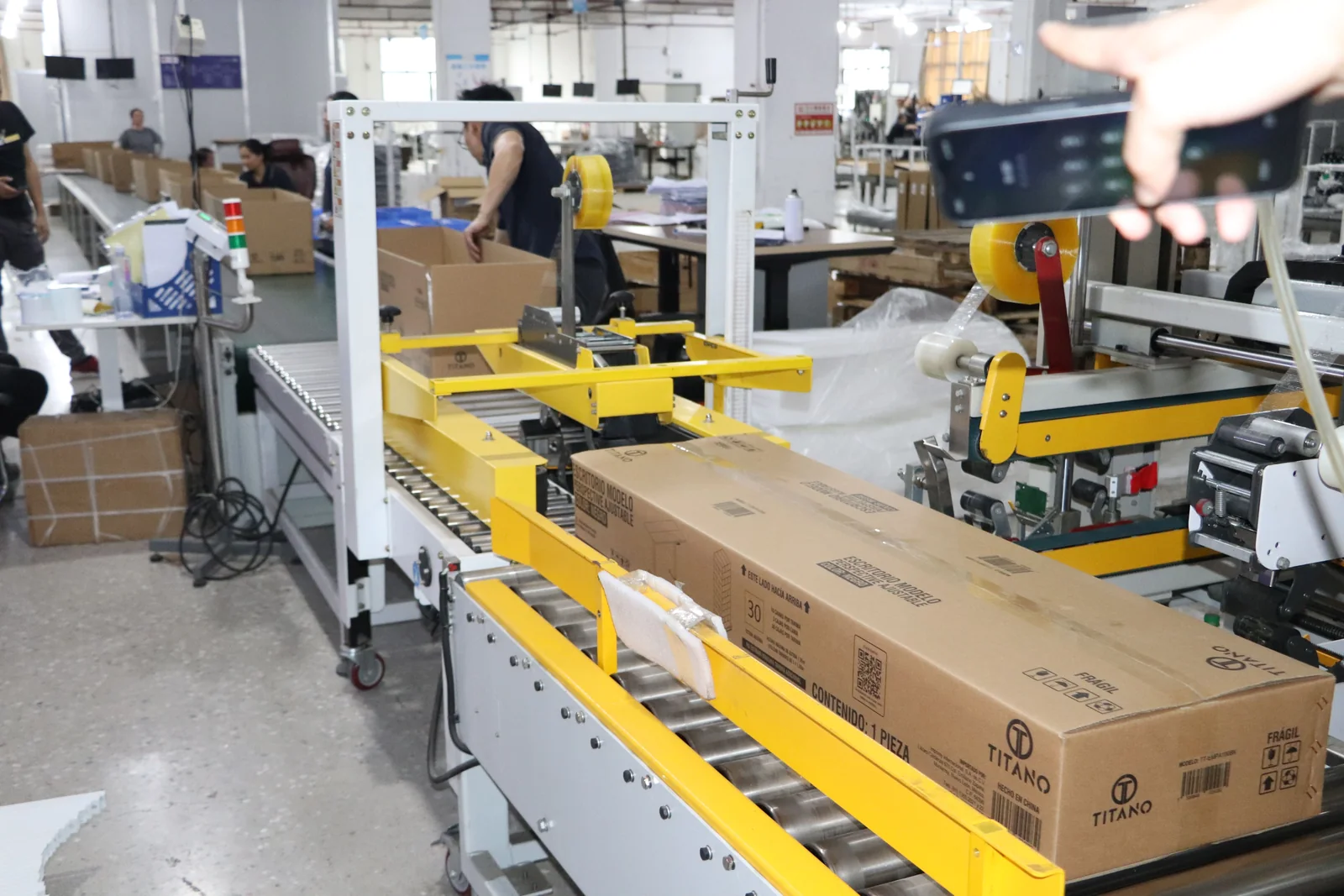
For launch assets, specify product photos, dimensions, feature explanations, assembly video, technical files and language versions. Agree formats, usage rights, costs and delivery dates. Create final sales assets from the approved configuration, or clearly identify any prototype imagery that still needs replacement.
Marketing claims must match the product evidence. Do not let a provisional load rating, adjustment range or certification claim migrate from an early presentation into the final listing.
Website, campaign or distributor support can be useful, but it is a separate work package. Define responsibilities and measurement. A manufacturing relationship should not be interpreted as a promise of traffic or customer orders.
BUYER'S GUIDE
Use a milestone-based concept-to-launch schedule
Ask for a schedule that names the output and approval owner at each stage. A single “launch in 60 days” statement leaves the dependencies hidden.
The following is an illustrative 16-week planning scenario, not an industry average or a GB Ergonomic lead-time promise. It assumes adaptation of existing desk and chair platforms, available components and prompt buyer approvals. New tooling, new structural designs, failed tests or additional sample rounds require a revised plan. Final freight, customs clearance and warehouse receipt are not included.
- Weeks 1–2: product definition and feasibility. Agree the market, configurations, preliminary costs, development responsibilities and validation plan. The gate is an accepted brief, not merely a quotation.
- Weeks 3–5: sampling and feedback. Prepare and review desk and chair samples, finishes and initial packaging. Plan sample transport explicitly. The gate is recorded acceptance or a clear revision list.
- Weeks 6–9: validation and specification freeze. Complete the agreed functional reviews and applicable testing. Confirm actual laboratory availability before accepting these dates. The gate is an approved configuration with unresolved issues closed or explicitly controlled.
- Weeks 10–11: pre-production and launch-file review. Verify first articles, packing, labeling and instructions. Review final sales assets in parallel after the relevant product details are approved. The gate is written production release.
- Weeks 12–16: production, inspection and dispatch preparation. Complete the agreed batch, inspection and shipment-document review. The gate is authorized shipment release; warehouse availability requires a separate logistics schedule.
Give the desk and chair independent gates. One category should not be released simply because the other is ready. For the approval details, see our private-label sampling and approval process.
BUYER'S GUIDE
Recognize red flags without confusing outsourcing with deception
A transparent trading company can provide useful sourcing and coordination. A manufacturer can also buy specialist components. The concern is a supplier claiming direct control that it cannot substantiate.
Pause when a claimed factory-direct supplier repeatedly avoids identifying its production site or arranging a relevant technical discussion. Check further when sample labels, documents and contracting details point to different entities without an explanation.
Other warning signs include changing specifications without a revision record, providing reports for unrelated products, refusing to define manufacturing scope, and promising every customization immediately without assessing tooling or validation. These signals call for investigation; they are not automatic proof of fraud.
Ask who can approve a process change, release a batch or investigate a failed sample. A supplier that can only relay messages may not provide the engineering access your private-label program needs—even if its commercial service is otherwise competent.
Before committing, classify each essential requirement as verified, conditional or unresolved. Verified means evidence has been reviewed. Conditional means the scope, owner and completion gate are agreed. Keep unresolved safety, identity or critical product questions off the production-release list.
BUYER'S GUIDE
GB Ergonomic: a factory-direct program discussion in practice
Case example: connect the factory work to the brand launch
GB Ergonomic is the B2B brand of Foshan Xinguibin Intelligent Furniture, focusing on electric standing desks and ergonomic office chairs. Its published GB Ergonomic's desk and chair production workflows shows distinct desk and seating workflows, including tabletop processing, desk assembly and component checks, chair assembly and packing.
For a private-label line, the discussion can start with the buyer's market and product definition, identify an existing-platform or development route, and then agree sample criteria and production checkpoints. GB's partner-support outline also describes separately scoped product imagery, videos, website or landing-page direction and selected partner-launch collaboration.
Buyers should confirm what is available for their selected models and agree deliverables, timing, costs and rights in writing. NDA coverage and any protected design arrangement need their own defined scope.
Disclosure: This is GB Ergonomic brand content. The example describes published capabilities and a proposed discussion path, not an independent audit or a completed customer-success case.
FREQUENTLY ASKED QUESTIONS
Questions to settle before you request a quotation.
Can one manufacturer supply both desks and ergonomic chairs?+
Yes, if it can demonstrate appropriate engineering, manufacturing and quality arrangements for both categories. Verify each separately. A shared supplier can simplify coordination, but it does not eliminate category-specific samples, documentation or acceptance criteria.
What minimum order quantity should a private-label brand expect?+
There is no single MOQ that applies to every program. Ask for MOQ by model, finish, material and packaging variant, plus any conditions for a mixed order. Separate production MOQ from tooling or special-material commitments. Confirm whether sample charges can be credited and under what conditions.
How long does a new private-label line take to launch?+
The schedule depends on the starting platform, change scope, component readiness, sample transport, testing and approvals. Use the illustrative schedule above to ask better questions, not as a benchmark promise. Confirm factory readiness and destination arrival separately, with contingency for revisions.
Does private labeling protect my design from being sold elsewhere?+
Not automatically. Branding rights, confidentiality, tooling ownership and exclusivity are separate issues. Define the protected configuration and commercial conditions in writing, with appropriate legal review. Do not assume that an NDA alone creates exclusive supply rights.
RELATED BUYER GUIDES
Continue with the next practical question.
Each guide below develops the product, evidence or commercial question that naturally follows this one.
MANUFACTURER SHORTLIST
Top 10 Complete Standing Desk Manufacturers for Private-Label Launches
Compare 10 full-desk manufacturers for private-label launches, focusing on frame-to-top fit, SKU control, carton mapping and assembly assets.
MANUFACTURER SHORTLIST
Top 10 Office Furniture Manufacturers for Dealers and Distributors
Compare 10 office furniture manufacturers for dealer assortments, desk-and-chair reorders, mixed loads, partner content and territory discussions.
OEM / ODM SEATING
How to Choose an Office Chair Manufacturer: Key Questions for OEM and ODM Partnerships
Choose an office chair manufacturer for OEM or ODM. Ask about design, samples, quality evidence, private-label costs and sales-ready launch assets.
READY TO MAKE A MORE INFORMED DECISION?
Discuss your private-label desk and chair program
Send your destination market, product scope, estimated first-order quantity, customization priorities and launch window. Include the decision you need help making first so we can clarify the relevant program before sampling or quotation.
Get a focused responseSOURCES AND FURTHER READING
The references below support the standards, procurement and workplace context in this guide. Requirements should always be verified against the exact product configuration, destination market and commercial arrangement.
ABOUT THIS GUIDE
Written by the GB Ergonomic Editorial Team and reviewed on November 7, 2026. This is an educational buyer resource, not legal, certification or regulatory advice. Product evidence, standards and commercial terms should be confirmed for the exact configuration and destination market.