
BUYER'S GUIDE
What Does an Office Furniture OEM Procurement Process Include?
A typical process moves through a product brief, RFQ, quote clarification, sample review, production controls, inspection, shipping handover, and after-sales coordination. It turns vague reassurance into records without promising a fixed route or timeline.
| Stage | Buyer Input | Supplier Response Or Evidence Requested | Approval Owner | Open Issue | Proceed Or Hold Decision |
|---|---|---|---|---|---|
| Product Brief | Intended market, use case, target configuration | Feasibility questions and scope confirmation | Buyer | Missing requirement | Proceed only when the brief is usable |
| RFQ | Controlled drawings, quantities, packing and destination | Response against the same scope | Buyer | Assumptions or exclusions | Hold until comparable |
| Quote Clarification | Price comparison questions | Written inclusions, exclusions, and revision | Buyer | Commercial or technical gap | Select or revise |
| Sample | Configuration and review checklist | Identified sample and feedback response | Named approver | Unapproved deviation | Approve, revise, or reject |
| Production Controls | Approved reference and change route | Agreed records and escalation contacts | Buyer and supplier | Change or risk | Release only by agreement |
| Inspection | Acceptance plan and release authority | Applicable inspection or exception records | Named release owner | Nonconformance | Release, rework, or hold |
| Shipping Handover | Trade term, named place, marks, and document list | Handover documents and carrier coordination | Named logistics owner | Document or cargo issue | Ship or hold |
| After-Sales | Arrival-check and claim route | Point of contact and records requested | Buyer | Missing or damaged item | Investigate under agreed terms |
Use this as an internal tracker, not evidence that a supplier has performed each task. Link product categories—such as the office furniture product range—to the commercial brief.
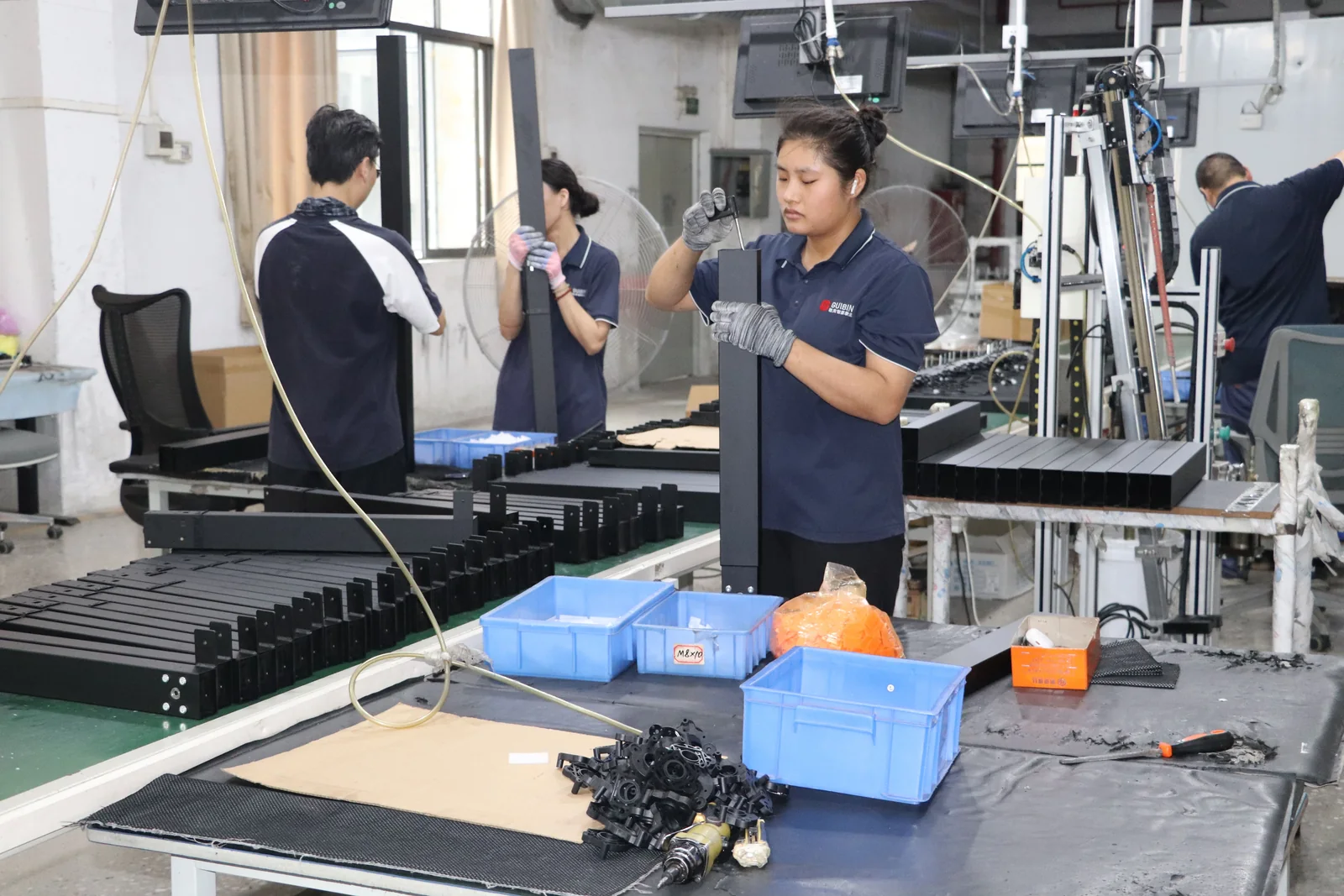
BUYER'S GUIDE
Define The Product Brief Before You Request A Quote
A quote cannot compensate for an incomplete brief. Before approaching suppliers, record the target market, product category, intended use, SKU and quantity bands, material and finish direction, branding, packaging, destination, timing assumptions, and acceptance basis. Attach the controlling drawing or specification revision. Mark unknowns as open rather than allowing different supplier assumptions.
For furniture destined for the US, UK, or Australia, check applicable product, labelling, material, import, and customer requirements for the exact configuration and market. Technical documents or declarations are not legal or certification promises without appropriate verification.
Separate Must-Haves From Open Questions
Make three columns: must-haves, preferences, and unresolved questions. Must-haves may cover configuration, branding position, carton restriction, or a buyer-specified acceptance document. Open questions may depend on feasibility, destination rules, customer approval, or final quantity.
This distinction gives suppliers room to flag a constraint without silently substituting a feature. It also prevents the procurement team from interpreting a preliminary answer as final approval.
Identify The OEM Or ODM Scope
State what the buyer provides and what the supplier will develop, adapt, or source. Identify the origin of drawings, artwork, packaging files, and changes, but do not settle design ownership or contractual rights with a shorthand label. For the two working models, see OEM vs ODM office furniture.
BUYER'S GUIDE
Build An RFQ That Makes Supplier Responses Comparable
An RFQ creates a shared response basis. Give every supplier the same drawing version, configuration, marks, quantity tiers, packing, destination, documents, and acceptance basis. Ask suppliers to list deviations separately. The detailed tool is in our office furniture RFQ and quotation comparison guide.
| RFQ Field | Buyer Input | Supplier Response | Clarification Needed |
|---|---|---|---|
| Product Identification | SKU, drawing, revision, photographs if relevant | Configuration understood; stated deviation | Which reference controls? |
| Materials And Finish | Required material, colour, surface, or approved sample reference | Proposed material and finish description | What is substituted or pending? |
| Quantity And Destination | Quantity bands, destination country/city, target delivery window | Price basis and stated shipment assumptions | Which volume and destination drive the quote? |
| Branding And Packaging | Marks, artwork status, carton or labelling needs | Included activities and sample requirement | Who approves files and packaging reference? |
| Evidence And Acceptance | Requested documents, sample approach, inspection basis | Available documents and qualifications | Is each item product- and market-specific? |
| Commercial Scope | Requested trade-term basis and currency | Price inclusions and exclusions | What remains outside the price? |
Record Assumptions, Revisions, And Exclusions
A quote is an RFQ interpretation. Put its revision, date, currency, quantity basis, validity conditions, and exclusions in a revision log. Document each post-call change to avoid comparing unlike delivery-cost assumptions.
Do not assume an email thread preserves the current decision. Issue a dated clarification record, identify the person who can accept it, and attach it to the order record once agreed.
BUYER'S GUIDE
Compare Quotations On Scope, Not Just Unit Price
Compare scope before price. Check configuration, quantity, sample or tooling, packaging, marking, documents, delivery basis, and tax or transport responsibilities. A lower unit price may simply leave more outside the response.
| Comparison Point | Check Before Selection | Buyer Decision |
|---|---|---|
| Product Scope | Same model, configuration, materials, and revision? | Do not compare until aligned |
| Quantity Basis | Same quantity tier and unit of measure? | Reprice if different |
| Pack-Out | Same carton concept, labels, and included accessories? | Confirm inclusions |
| Sample And Tooling | Identified separately from production goods? | Approve, defer, or exclude |
| Documents | Same proposed document list and revision route? | Request missing evidence |
| Freight, Duties, And Taxes | Same named trade-term rule and place? | Assign responsibility in writing |
| Acceptance And Claims | Same inspection, release, and exception route? | Agree before order release |
Close Gaps Before You Select A Supplier
Send the same written gap list to each shortlisted supplier. Record effects on price, configuration, packing, documents, or timing, then incorporate relevant answers into the order documents.
Quote clarity is different from supplier verification. Before relying on a factory representation, use a separate due-diligence process to verify an office furniture OEM factory. Do not infer facilities, capacity, testing, or certification from a quotation alone.
BUYER'S GUIDE
Approve A Representative Sample And Lock The Reference
A representative sample gives both sides a reference for the agreed configuration. Review relevant configuration, material, colour, surface, artwork, functions, and packaging. Record the identifier, date, observations, corrections, decision, and approver.
An approval should say exactly what it approves. If a surface chip, colour variation, missing accessory, or provisional carton is accepted only for sample review, make that limitation explicit. Do not let an informal “looks good” become a vague production instruction.
Document Changes After Sample Approval
Any change after sample approval should have a new revision number, description, possible effect on price, timing, packing, documents, and acceptance, plus an approver. If it materially affects the reference, request a new sample or other agreed evidence and reapprove it. Silence is not change control.
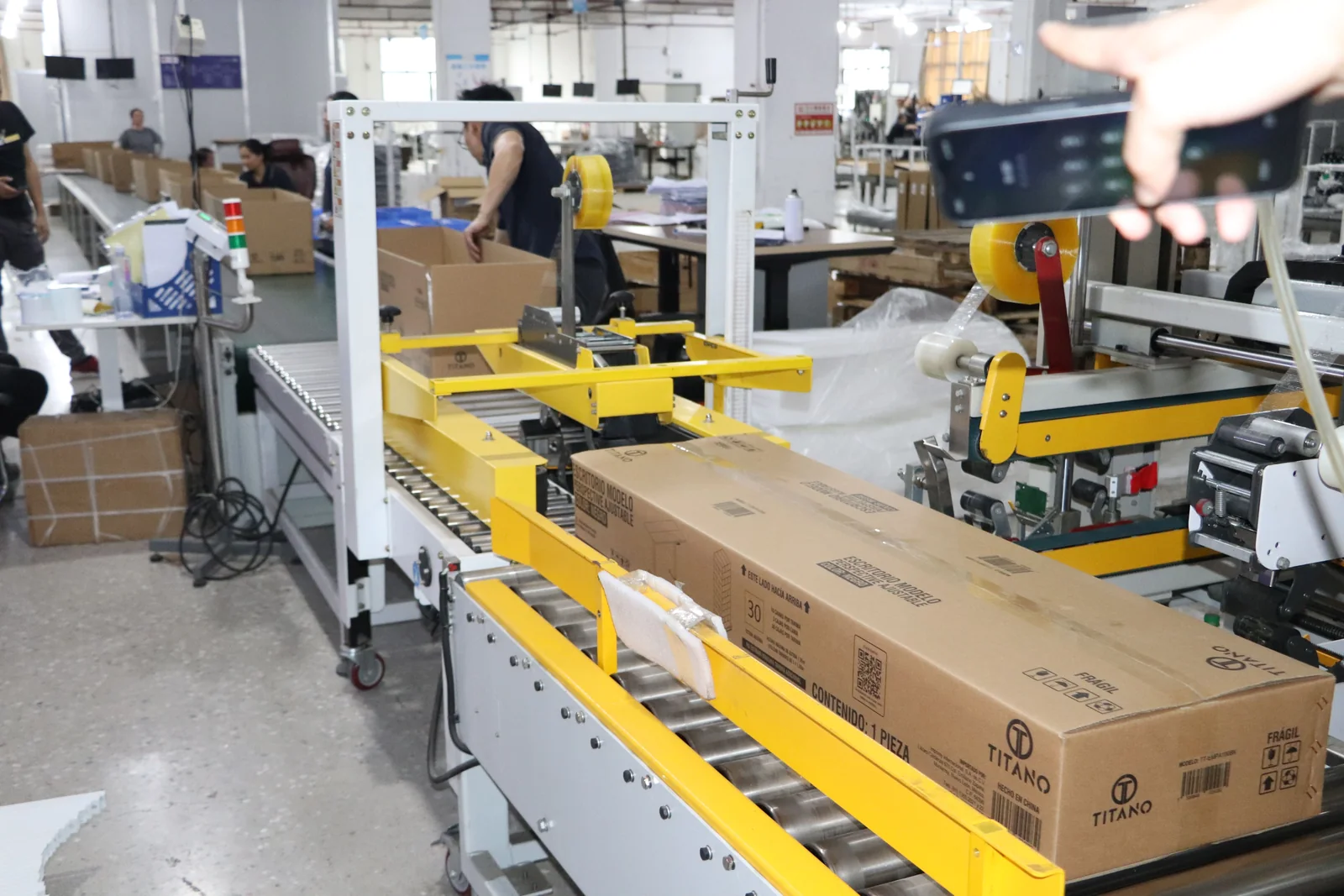
BUYER'S GUIDE
Agree On Production Controls Before The Order Moves Forward
Production controls work best when assigned in advance. Establish the current configuration and artwork, change authority, confirmation record, and escalation contact. Confirm available controls for the product and order.
| Control Point | Responsible Party | Record To Request Or Maintain | If An Exception Appears |
|---|---|---|---|
| Current Specification | Buyer and supplier | Controlled drawing, configuration, and revision log | Stop use of superseded version |
| Branding Or Artwork | Named buyer approver and supplier contact | Approved artwork proof or record | Obtain written disposition |
| Proposed Change | Party raising the change | Change notice and impact statement | Do not implement without authorization |
| Quality Or Pack-Out Issue | Named quality contacts | Issue description, photos if appropriate, disposition | Escalate under agreed route |
| Order Communication | Named commercial contacts | Dated clarification or meeting record | Update open-issue log |
The goal is traceability, not paperwork for its own sake. Ask what records can be made available, who owns them, and how exceptions escalate. Find working checklists in GB Ergonomic resources.
BUYER'S GUIDE
Plan Inspection And Acceptance Before Shipment
Write the acceptance plan before goods are ready. Identify inspection items, reference, lot or scope, defect categories if used, inspector, findings record, exception route, reinspection need, and release authority. Sampling is a decision method, not proof that every unit is defect-free.
The U.S. National Institute of Standards and Technology explains that lot acceptance sampling uses a random sample to decide a lot’s disposition, not estimate its quality. ISO 2859-1:2026 describes AQL-indexed, lot-by-lot attribute-sampling schemes. Neither makes a plan mandatory for office furniture, so the buyer and supplier should agree method, scope, and consequences before use.
Request order-relevant records: the agreed checklist, inspection or exception record, corrective-action response if agreed, packaging confirmation, and release instruction. Review them against the approved configuration. One result is not a claim about future shipments.
BUYER'S GUIDE
Confirm Shipping Handover And After-Sales Responsibilities
At handover, match the shipping plan to the order: Incoterms® rule and named place, marks, packing list, documents, booking responsibility, destination documentation, and discrepancy contact. ICC explains that Incoterms® 2020 allocates tasks, costs, risks, and obligations under 11 rules; write the selected rule and place accurately into transaction documents (ICC).
Import requirements are destination-specific. HMRC says a UK full import declaration can require the commodity code, parties, goods and packaging, transport and costs, valuation, and relevant certificates or licences. US and Australian buyers should likewise confirm requirements with their importer of record, customs broker, and relevant authority rather than assuming a supplier owns every clearance obligation.
For arrival, agree who checks cartons and goods, the reporting window and evidence expected for shortages or damage, the escalation contact, and the applicable order terms. That is an after-sales coordination route, not a warranty or logistics-result promise.

FREQUENTLY ASKED QUESTIONS
Questions to settle before you request a quotation.
What Should An Office Furniture OEM RFQ Include?+
Include the controlled drawing or specification version, configuration, material and finish direction, quantity bands, branding, packaging, destination, trade-term request, requested documents, and acceptance basis. State unknowns as open questions. Use the detailed [RFQ and quotation comparison guide](/blog/office-furniture-oem-rfq-quotation-comparison/) to build a fuller working template.
Should Buyers Approve A Sample Before Production?+
Where the parties agree to use a sample, identify its configuration and the approval scope in writing. Record the reviewer, decision, deviations, and route for any post-approval change. The appropriate sample method depends on the product and order, so it should not be treated as a universal requirement.
How Can Buyers Compare OEM Quotations Fairly?+
First normalize the model, configuration, quantity, packaging, destination, document scope, and delivery basis. Then compare inclusions, exclusions, and unresolved assumptions alongside price. Ask suppliers to clarify gaps in writing before selection.
What Evidence Should Be Reviewed Before Shipment Release?+
Review the evidence named in the order’s acceptance plan: the applicable approved reference, agreed inspection or exception records, packaging and marking confirmation where relevant, document list, and the named release decision. If an issue remains open, record whether it is resolved, accepted under a documented disposition, or a reason to hold release.
RELATED BUYER GUIDES
Continue with the next practical question.
Each guide below develops the product, evidence or commercial question that naturally follows this one.
OEM PROCUREMENT
How to Write an Office Furniture OEM RFQ and Compare Quotations
Make supplier quotes comparable by defining specifications, packaging, destination and decision criteria.
FACTORY VERIFICATION
How to Verify an Office Furniture OEM Factory Before You Order
Check legal identity, production scope, quality records and subcontracting before committing an order.
PRIVATE LABEL
How to Choose Commercial Furniture Manufacturers for Your Private-Label Desk and Chair Line
Compare commercial furniture manufacturers for your private-label desk and chair line. Know what to ask about design, sampling, packaging and launch support.
READY TO MAKE A MORE INFORMED DECISION?
Request A Scoped OEM Quote Review
Have a current product specification or RFQ that needs a second procurement read? [Request A Scoped OEM Quote Review](/contact/) by sharing your target product, destination market, quantity range, and current drawing, specification, or open questions. GB Ergonomic can review the scope for a procurement discussion; final product, commercial, shipping, and compliance terms should be confirmed in the applicable order documents.
Get a focused responseSOURCES AND FURTHER READING
The references below support the standards, procurement and workplace context in this guide. Requirements should always be verified against the exact product configuration, destination market and commercial arrangement.
- International Chamber of Commerce — Incoterms® 2020
- National Institute of Standards and Technology — What Is Acceptance Sampling?
- International Organization for Standardization — ISO 2859-1:2026
- HM Revenue & Customs — Making A Full Import Declaration
- Australian Border Force — How To Import
- U.S. Customs And Border Protection — Importing Into The United States
ABOUT THIS GUIDE
Written by the GB Ergonomic Editorial Team and reviewed on October 27, 2026. This is an educational buyer resource, not legal, certification or regulatory advice. Product evidence, standards and commercial terms should be confirmed for the exact configuration and destination market.