
BUYER'S GUIDE
Start With The Contracting Entity: Is The Supplier’s Legal Identity Clear?
Start with the party that will sell to you. Request the legal entity name, registered address, registration identifier where applicable, and the names that will appear on the quotation, contract, invoice, and payment instructions. Check them against the relevant official company registry or another appropriate primary record, and log the source and date.
A registry search is not legal advice or proof of future performance. It does reveal basic inconsistencies before money, tooling, or product files move forward. If a trading company is involved, identify its role rather than treating it as a problem by default. The contracting and payment paths should be transparent.
| Field To Record | What To Compare | Follow-Up If It Does Not Match |
|---|---|---|
| Legal entity name | Quote, contract draft, invoice, bank beneficiary, registration search | Ask for a written explanation and updated documents. |
| Registered address | Registry result, supplier letterhead, factory address | Confirm whether the entity and manufacturing site differ. |
| Signatory authority | Contract signatory and stated authority | Request confirmation through the contracting entity. |
| Search source and date | Official registry or other primary source | Log the reviewer and preserve the search reference. |
BUYER'S GUIDE
Confirm What The Factory Actually Makes
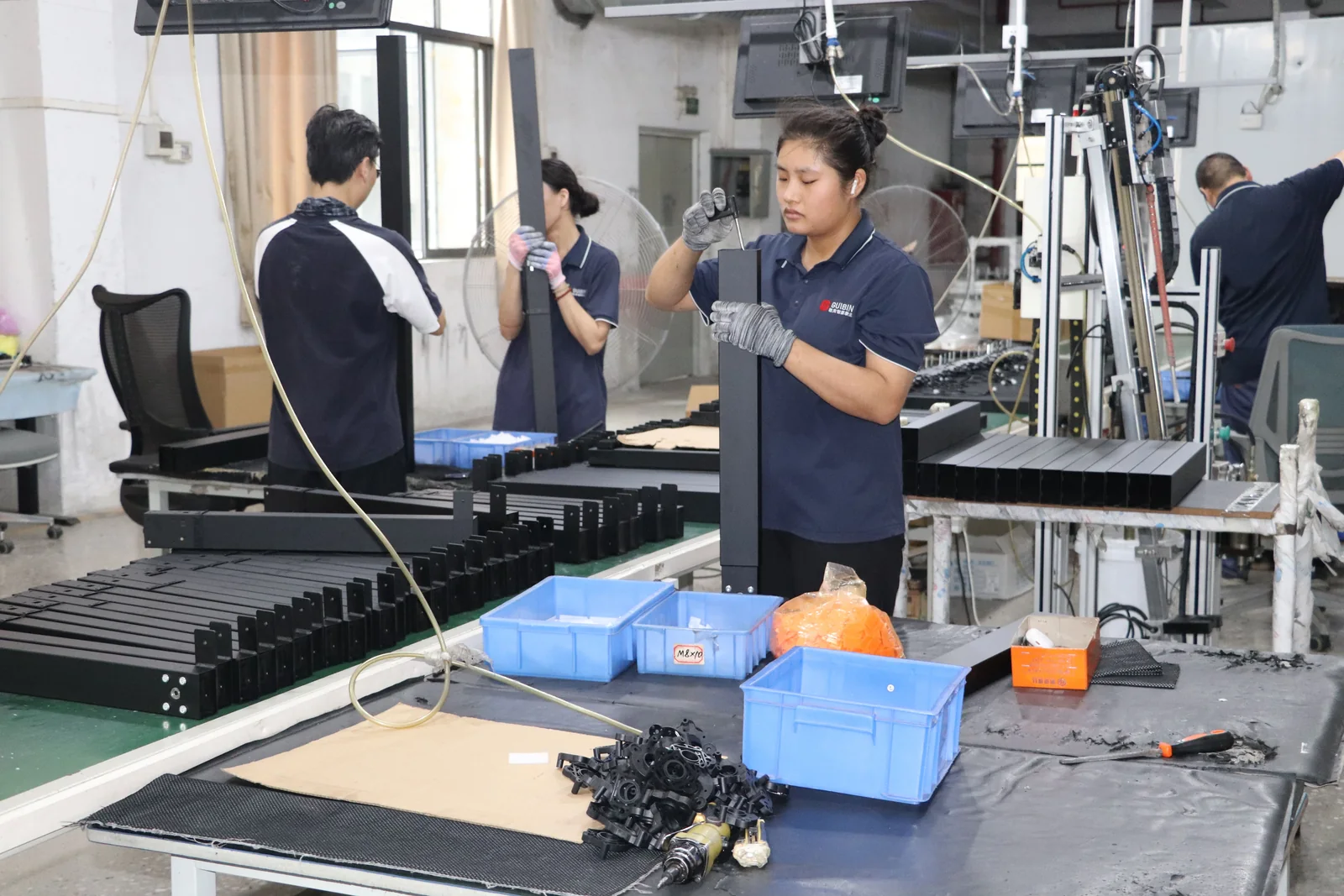
A supplier may make components, assemble purchased parts, manage subcontractors, export finished goods, or combine these roles. There is no single acceptable model for every office furniture project. What matters is an accurate map of who does what for your product.
For each product family, separate work at the stated site from externally sourced components, external processes, and final inspection. For a height-adjustable desk, this might distinguish metal fabrication, finishing, motors or controls, desktop production, assembly, and packing. For seating, it might distinguish mechanisms, bases, upholstery or mesh, assembly, and packaging. Confirm the account through documents, a live walkthrough, or an independently arranged visit where proportionate to risk.
This map also helps clarify whether an OEM or ODM arrangement fits the project. The label does not replace a responsibility map; see OEM vs. ODM sourcing models for the separate design and development questions.
| Product Or Process | Done At Stated Site? | External Party Or Source | Evidence Seen | Still To Verify |
|---|---|---|---|---|
| [Component or process] | [Yes / No / Unknown] | [Name or description] | [Record, observation, or interview] | [Question and owner] |
| [Final assembly] | [Yes / No / Unknown] | [Name or description] | [Record, observation, or interview] | [Question and owner] |
| [Final inspection] | [Yes / No / Unknown] | [Name or description] | [Record, observation, or interview] | [Question and owner] |
BUYER'S GUIDE
Test Capacity Claims Against Order-Specific Evidence
A stated output, machine list, headcount, or lead time does not establish that your order can be made as specified. Test the claim against the exact SKU or configuration, quantity range, requested production window, and bottleneck operations. Ask how current work, critical bought-in parts, inspection, and packaging affect the plan.
Avoid requesting sensitive information you do not need. An authorised, redacted production plan, dated work-order view, or capacity summary may be enough. Record what was shown, the date it represented, and what remains uncertain. Capacity is time-sensitive, so an old audit cannot answer a current scheduling question.
Ask For Evidence That Matches The Product And Time Period
For a desk frame, match evidence to the specified frame, control set, finish, and pack-out—not another desk category. For a chair, distinguish the actual mechanism, base, upholstery or mesh configuration, and packaging where relevant. Where disclosure is limited, request an authorised summary and note the limitation.
| Buyer Question | Useful Order-Specific Evidence To Request | Cross-Check | Decision If Unclear |
|---|---|---|---|
| Can this configuration be produced in the proposed window? | Dated, authorised schedule view or capacity summary | Compare SKU, quantity, and requested window | Hold the next commitment. |
| What is the constraint? | Supplier explanation of a critical process or bought-in part | Check the production map | Ask how it is managed for this order. |
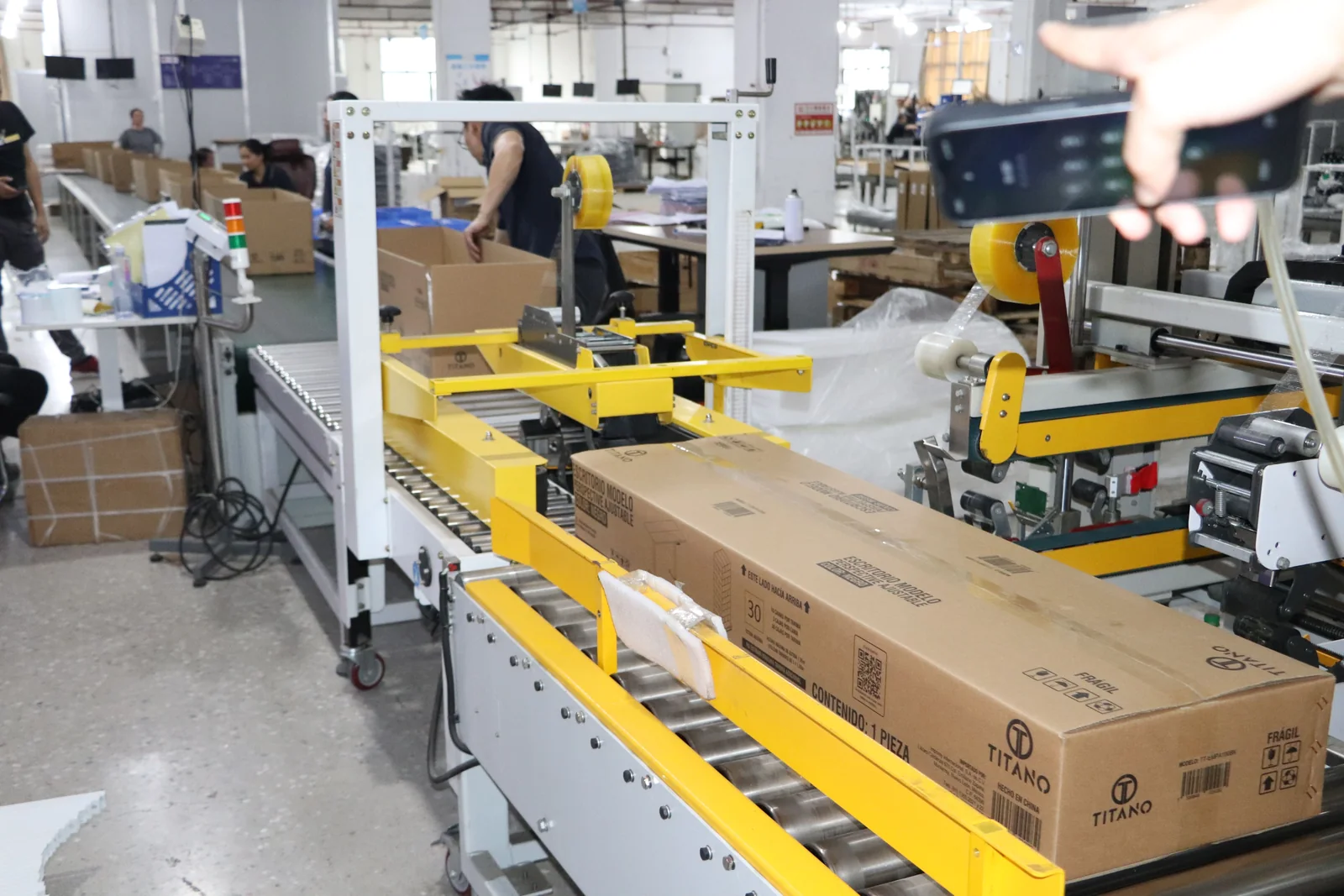
| Who owns final assembly and packing? | Process map, walkthrough, or authorised record | Compare quotation scope and product plan | Clarify responsibility and inspection access. |
BUYER'S GUIDE
Review The Quality System Through Records, Not Slogans
“Quality control” is a claim until you can see how it works for the product in question. A quality management system is a defined set of policies, processes, and responsibilities; documentation can support traceability and accountability.[2] That makes relevant records more useful than an unsupported badge or generic quality statement.
Ask how incoming materials, in-process work, finished goods, and nonconforming items are controlled. Request examples the supplier is authorised to disclose and that relate to the product family. Look for a chain between an order or lot, the specification used, inspection results, any issue found, its disposition, and release. Check any management-system certificate for issuer, scope, site, and validity, but do not treat it as proof that your order will conform.
Check Traceability And Change Control
Traceability means a buyer can follow a reasonable path from the order and approved configuration to a batch or production identifier, inspection evidence, and approved changes. Revised drawings, substitutions, component changes, and packaging changes should have an identifiable revision, approval owner, and effective date.
| Control Area | What To Ask | Evidence To Review By Order Or Batch | Gap To Log |
|---|---|---|---|
| Incoming materials | How are materials checked against approved requirements? | Authorised receiving or inspection record | Material, supplier, or revision not linked |
| In-process checks | What checks occur at critical stages? | Relevant check record and work instruction revision | Process or configuration unclear |
| Final release | Who releases finished goods and against what criteria? | Final inspection or release record | Acceptance criteria not agreed |
| Nonconformity handling | What happens when a defect or variation is found? | Authorised issue and disposition example | Closure or recurrence not visible |
| Change control | How are changes reviewed and communicated? | Revision log, approval, or updated specification | Owner or effective date missing |
BUYER'S GUIDE
Make Subcontracting Visible Before You Approve A Supplier
Subcontracting is common in furniture supply chains and is not automatically a reason to reject a supplier. The risk rises when the scope is unclear, the buyer assumes a process is in-house, or an external change can happen without notice.
Ask which components and processes are outsourced, who accepts them on receipt, how nonconforming parts are handled, and when you will be notified of a material change. Map the hand-offs from component maker to factory, outside finisher to assembly site, or subcontractor to pack-out. Focus on visibility, controls, and traceability—not a simplistic in-house-versus-outsourced judgment.
BUYER'S GUIDE
Verify Export Readiness For Your Destination And Order
Separate factory evidence from the responsibilities of the importer, brand owner, distributor, and other economic operators. Requirements depend on the product, configuration, claims, components, destination, and sales route. A factory document can inform your assessment, but it is not a blanket passport to sell.
For Great Britain, businesses must check the rules that apply and meet importer responsibilities for goods entering from outside the UK.[3] In Australia, suppliers—including importers and distributors—must comply with any relevant mandatory standards before supply, though not every product has one.[4] In the United States, furniture containing regulated composite-wood products may need TSCA Title VI documentation and recordkeeping; assess applicability for the finished good and components.[5]
Use these as prompts to identify the requirements for your order, not as a universal office furniture checklist. Assign each requirement to an owner, record its source and version, and obtain qualified legal or compliance advice where an obligation or classification is unclear.
| Destination Review Field | Record Before Approval |
|---|---|
| Target market and sales channel | Country or region, customer type, and intended configuration |
| Requirement source and version | Applicable regulator or standard source; not an undated claim |
| Supplier evidence | Product- and configuration-specific documents the supplier may provide |
| Buyer-side responsibility | Importer, brand, distributor, or other owner to confirm |
| Validity and open question | Date, scope, missing evidence, and responsible reviewer |
BUYER'S GUIDE
Use A Factory Verification Checklist And Evidence Log
An evidence log turns conversations into accountable next steps. It should show the supplier’s statement, evidence seen, cross-check used, and owner for each gap. It is not a score designed to create false certainty.
Pair it with an office furniture RFQ and quotation comparison guide. Relevant product categories and the resources hub can help connect the product brief, requirements, and supplier questions.
| Verification Area | Question To Ask | Evidence Seen And Date | Cross-Check | Risk, Owner, And Next Step |
|---|---|---|---|---|
| Legal identity | Does the seller match the contracting and payment entity? | [Record] | Registry and transaction documents | [Open point / owner] |
| Production scope | Which operations are in-house, bought in, or outsourced? | [Record] | Process map, walkthrough, or visit | [Open point / owner] |
| Capacity | Does the proposed window fit this order’s SKU and quantity? | [Record] | Dated schedule or authorised summary | [Open point / owner] |
| Quality and traceability | Can the order be linked to controls, results, and approved changes? | [Record] | Batch, inspection, and revision evidence | [Open point / owner] |
| Subcontracting | Are key external processes disclosed and controlled? | [Record] | Supplier disclosure and acceptance controls | [Open point / owner] |
| Destination readiness | Who owns each applicable market requirement? | [Record] | Requirement source and configuration | [Open point / owner] |
BUYER'S GUIDE
Decide Whether To Proceed, Pause, Or Escalate
Proceed when the contracting entity, production scope, and order-specific evidence are coherent enough for a limited next step, such as a scoped RFQ, sample review, or further factory review. It does not guarantee future production, delivery, or compliance.
Pause when a material question can be resolved with a named document, clarification, or review. Escalate when the contracting entity conflicts with payment or contract documents, the production scope is concealed, evidence does not match the product or period, or reasonable verification is refused. Depending on risk, escalation may mean an independently arranged assessment, specialist compliance review, legal advice, or deciding not to continue.
For the broader stage gates after verification, read the office furniture OEM procurement process. To discuss the gaps in your current assessment, contact GB Ergonomic with the target product, destination market, order stage, and questions you need to close.
FREQUENTLY ASKED QUESTIONS
Questions to settle before you request a quotation.
What Documents Should I Request From A Furniture Factory?+
Request documents that support legal identity, stated production scope, quality controls, subcontracting disclosure, and destination-market review for the proposed order. Ask for version and date information, and request only records the supplier is authorised to share. The list should follow the product, configuration, market, and transaction.
Can A Video Tour Verify A Furniture Manufacturer?+
A live video tour can help compare a site with the supplier’s stated operations, but it has blind spots. Use it with legal-entity checks, order-specific records, subcontracting disclosures, and, where warranted, an independently arranged visit or assessment. Record both what the video showed and what it could not confirm.
How Can I Verify A Furniture Factory’s Production Capacity?+
Ask the supplier to relate its capacity statement to your SKU, configuration, quantity range, production window, key operations, and current commitments. Review authorised, dated evidence that matches those conditions. If it covers another product, site, or period, log it as insufficient.
Should I Reject A Factory That Uses Subcontractors?+
Not automatically. Identify the outsourced processes, acceptance controls, change-notification method, and traceability of the finished product. A transparent, controlled arrangement can be assessed; an undisclosed or poorly explained one creates a verification gap.
RELATED BUYER GUIDES
Continue with the next practical question.
Each guide below develops the product, evidence or commercial question that naturally follows this one.
QUALITY & RISK
A Buyer’s Checklist for Evaluating Desk and Office Chair Factory Quality Controls
Move the factory conversation from broad claims to visible working practices and controlled checkpoints.
OEM PROCUREMENT
B2B Office Furniture OEM Procurement: From RFQ to Delivery
Use stage gates to move from a controlled RFQ to sample approval, inspection and a clearer handover.
PRIVATE LABEL
How to Choose Commercial Furniture Manufacturers for Your Private-Label Desk and Chair Line
Compare commercial furniture manufacturers for your private-label desk and chair line. Know what to ask about design, sampling, packaging and launch support.
READY TO MAKE A MORE INFORMED DECISION?
Discuss Your Product Brief
Share the product direction, destination market and open questions. We will help identify the details worth clarifying before a quotation or sample discussion.
Get a focused responseSOURCES AND FURTHER READING
The references below support the standards, procurement and workplace context in this guide. Requirements should always be verified against the exact product configuration, destination market and commercial arrangement.
- OECD — Due Diligence For Responsible Business Conduct
- ISO — Quality Management Systems: An Introduction
- UK Government — Placing Manufactured Goods On The Market In Great Britain
- Australian Competition And Consumer Commission — Product Safety Standards And How To Comply
- U.S. Environmental Protection Agency — Frequent Questions On Formaldehyde Standards
ABOUT THIS GUIDE
Written by the GB Ergonomic Editorial Team and reviewed on October 27, 2026. This is an educational buyer resource, not legal, certification or regulatory advice. Product evidence, standards and commercial terms should be confirmed for the exact configuration and destination market.