
BEGIN WITH TRACEABILITY
Quality starts with knowing what product is being checked.
Before reviewing a workshop, make sure the product file is clear. It should identify the model, configuration, drawings, key components, finish references, accessories, packing and buyer acceptance criteria. Without that foundation, an inspection can only confirm that something was checked—not that it was the right thing.
The same applies to reports and certificates. Ask for the issuing organisation, date, model identifier, sample description, standard or method and scope. BIFMA's Compliant programme explains that a product verification is tied to applicable testing and that substantive product changes require retesting. That principle is useful whether or not a product is listed in any registry: change should have a documented consequence.
Ask to see the record
A mature process can show the form, screen or controlled document used to record the check. It is more useful than a verbal statement that an inspection happens.
DESK PROGRAM CONTROLS
Look at the desk as a system of connected components.
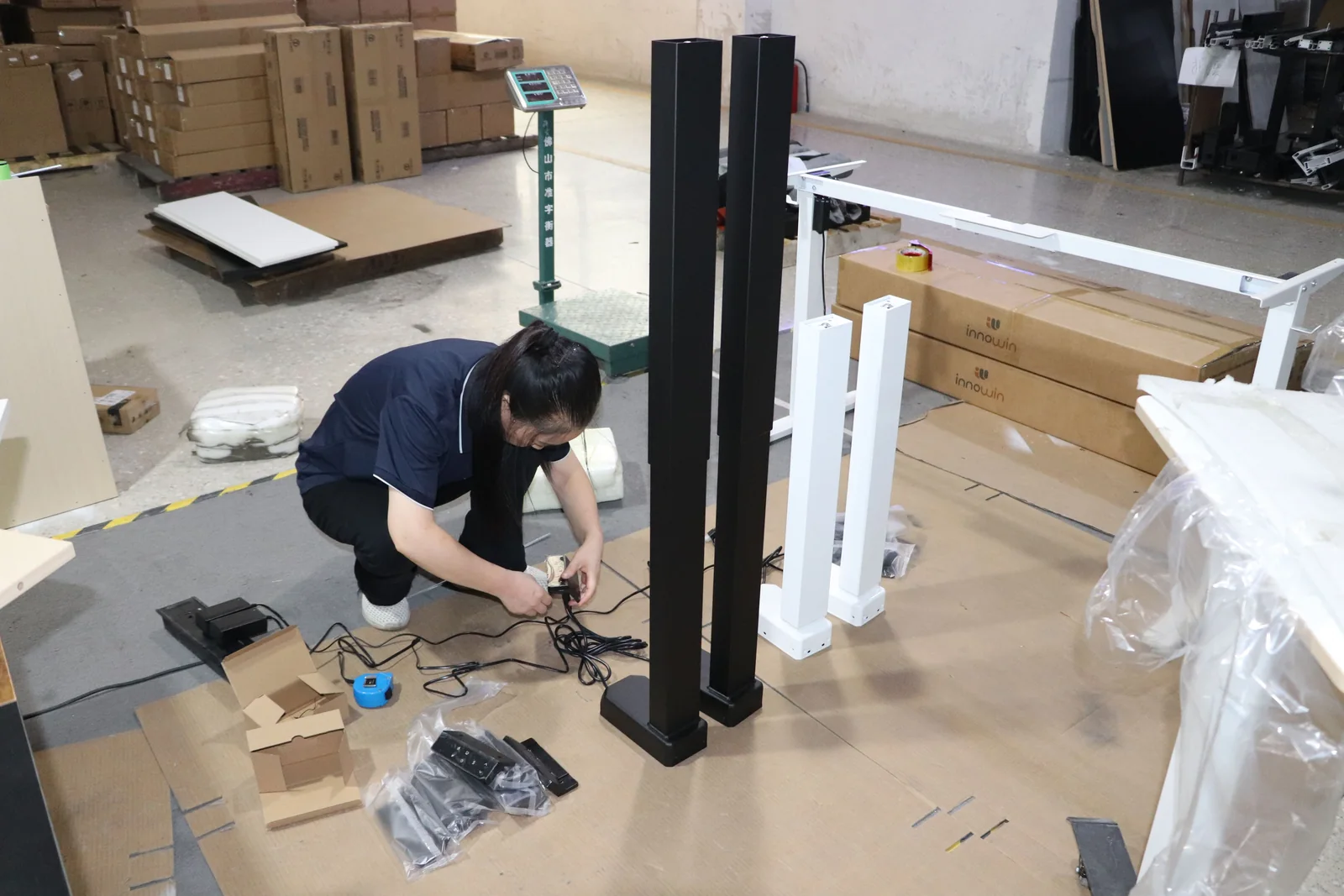
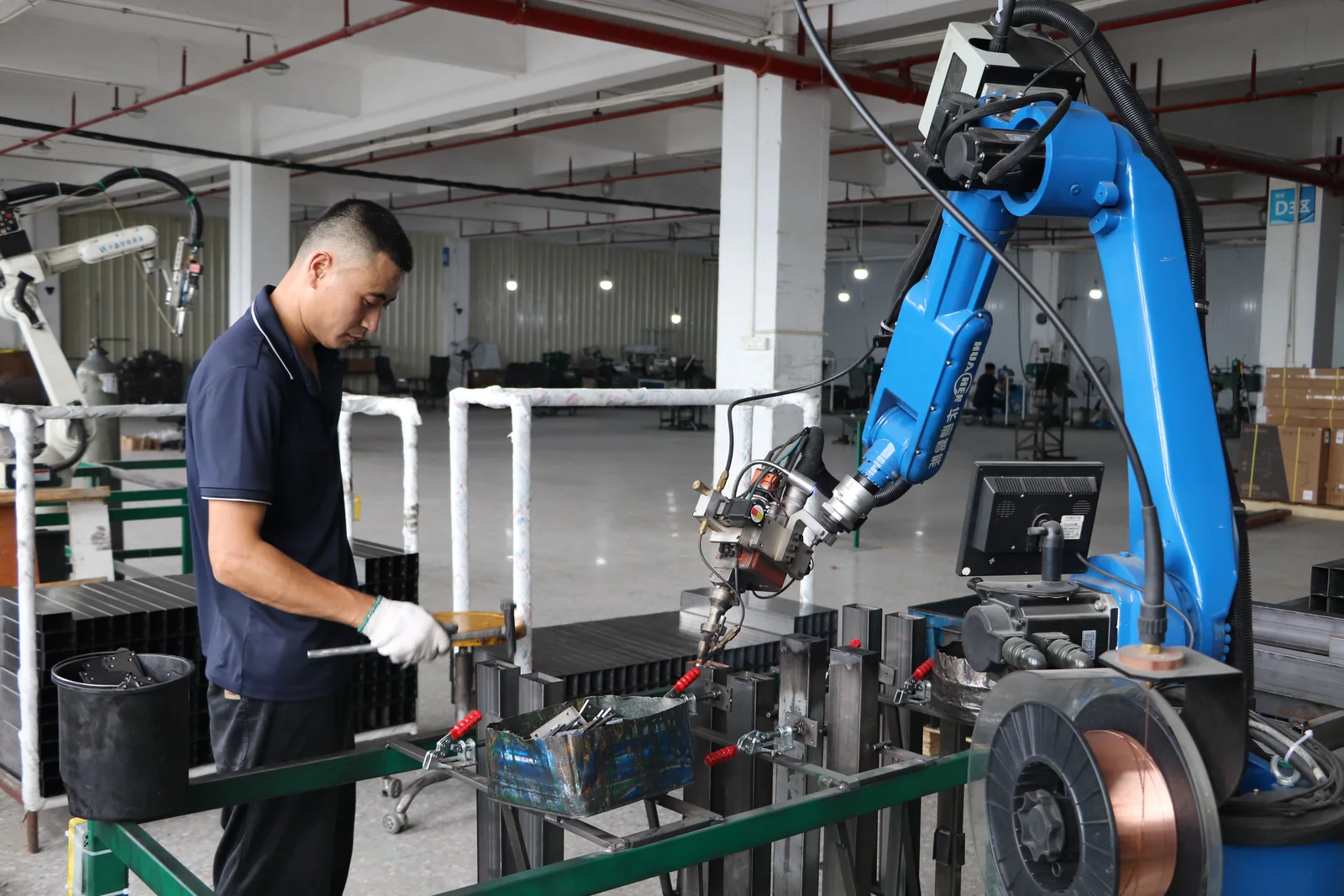
A standing desk programme includes more than a visual frame. Review the frame parts, fabrication, lifting columns, motors, control box, handset, power components, tabletop interfaces, fasteners and carton. The conversation should establish which parts are fixed in the approved configuration, how incoming components are identified and what happens when a supplier or component changes.
BIFMA lists ANSI/BIFMA X5.5 among its desk and table product standards and includes height-adjustable tables in that scope. Electrical and moving-part considerations require their own product- and market-specific review. Ask the factory to describe the evidence available for the quoted desk rather than accepting a general assurance about a similar platform.
CHAIR PROGRAM CONTROLS
A chair needs function checks as well as a final visual review.
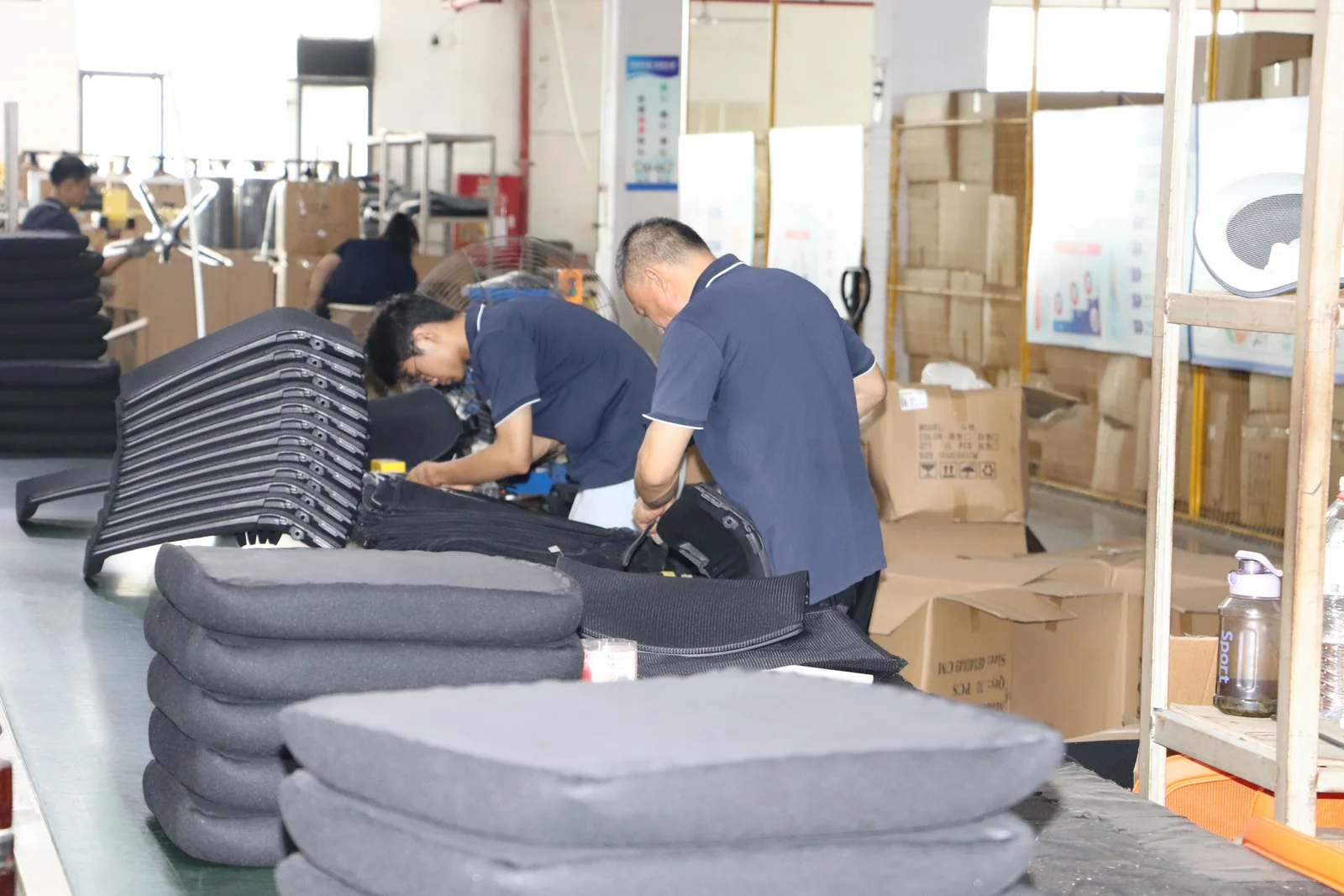
For office chairs, start with the assembly architecture: mechanism, seat, back, arms, base, casters, gas lift, mesh or upholstery and fasteners. Then ask what the finished-product review covers. Adjustment functions, fit-up, appearance, labels, accessory completeness and packing are all practical parts of the buyer's acceptance plan.
ANSI/BIFMA X5.1 is a general-purpose office chair test standard, and BIFMA lists other seating standards for more specialised categories. The practical lesson is not to demand a logo. It is to confirm that the evidence, sample and model description all refer to the chair you are considering.
OBSERVE THE SYSTEM
Ask how exceptions are held, corrected and released.
The most revealing quality question is often what happens when a component or finished product fails a check. Does the item get identified? Is the problem recorded? Who decides whether it is repaired, reworked or rejected? Is the buyer notified when the variation affects an approved sample or commercial agreement? The answer reveals whether quality is a gate or simply a final appearance check.
ISO explains that a quality management system establishes a framework for documented information, monitoring, measurement and continual improvement. ISO also makes clear that it does not prescribe exactly how an organisation must operate. That is why buyers should use a management-system certificate as one signal, then ask to see the actual product controls they need for the programme.
Factory review prompt
Ask the team to walk you through one recent nonconforming item: how it was identified, how it was contained, who made the decision and what prevented the same issue from repeating.
RELEASE GOODS WITH EVIDENCE
Pre-shipment inspection is a release gate, not a rescue operation.
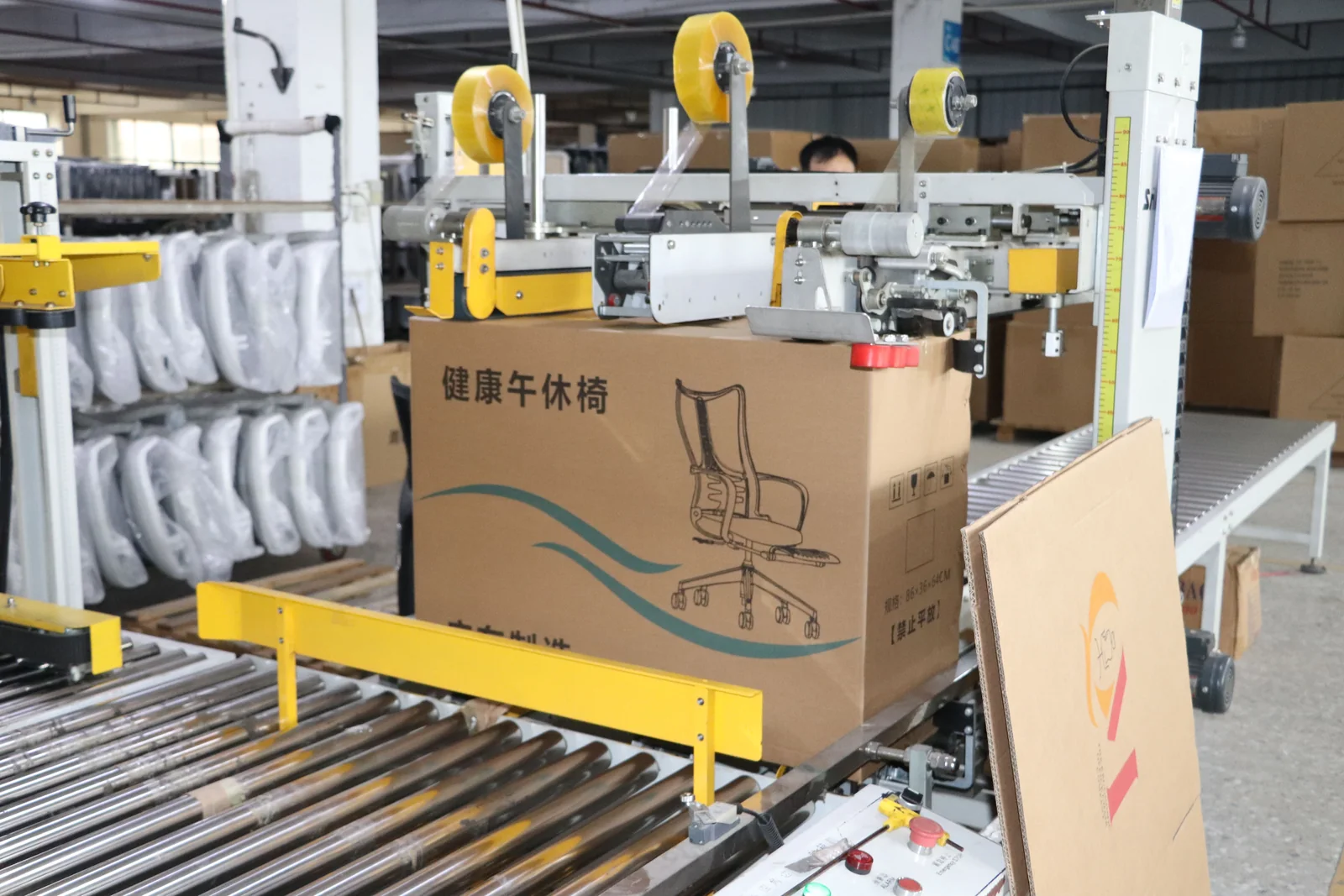
Before goods are released, revisit the approval file. Confirm the final configuration, packing, quantities, labels, photos, inspection results and any agreed shipping documents. If the buyer uses third-party inspection, align the timing, sampling and acceptance basis before production finishes. It is much harder to negotiate a critical point after the container is booked.
A well-run release gate also gives both parties an escalation route. If a deviation is found, the important question becomes what will happen next, who approves the remedy and how the decision is documented. Clear records preserve commercial relationships when the situation is not perfect.
FREQUENTLY ASKED QUESTIONS
Questions to settle before you request a quotation.
Does ISO 9001 prove an individual desk or chair is compliant?+
No. ISO 9001 is a quality-management-system framework. It can be a useful signal about documented processes, but it does not replace a product-specific report, approval sample, inspection record or market-specific conformity assessment.
What is the difference between a test report and a certificate?+
A test report records the result of a specified assessment on a stated sample. A certificate or listing may have a broader programme scope and conditions. Ask what the document covers, who issued it, whether it is current and whether it identifies the configuration you are purchasing.
Can we use our own quality-control plan?+
Yes. In fact, a buyer-defined plan is often helpful when it identifies the critical dimensions, functions, finish criteria, documentation and acceptance basis required for the programme. The supplier should confirm which checks it can perform and which require additional agreement or independent inspection.
RELATED BUYER GUIDES
Continue with the next practical question.
Each guide below develops the product, evidence or commercial question that naturally follows this one.
FACTORY VERIFICATION
How to Verify an Office Furniture OEM Factory Before You Order
Check legal identity, production scope, quality records and subcontracting before committing an order.
SUPPLY CHAIN
From Sample Sign-Off to Container Loading: The Production Milestones Worth Agreeing
Use a practical stage-gate view to protect quality, timing and the final handover to your warehouse.
FACTORY VERIFICATION
The Complete Buyer’s Guide to Evaluating an Ergonomic Office Chair Manufacturer
Compare a chair factory through product evidence, sample control, production repeatability and commercial accountability.
READY TO MAKE A MORE INFORMED DECISION?
Make your quality questions programme-specific.
Share the desk or chair direction and your destination market. We will outline a practical first set of configuration, sample and process-control questions.
Request a quality-control discussionSOURCES AND FURTHER READING
These external references support the standards, shipment and regulatory context in this guide. Requirements should always be verified against the exact product configuration, destination market and commercial arrangement.
ABOUT THIS GUIDE
Written by the GB Ergonomic Editorial Team and reviewed on October 27, 2026. This is an educational buyer resource, not legal, certification or regulatory advice. Product evidence, standards and commercial terms should be confirmed for the exact configuration and destination market.