
BUYER'S GUIDE
What Do “Stability” and “Load Capacity” Actually Tell a Buyer?
Stability is an observed response under stated conditions. Load capacity is a model-specific claim that needs a stated definition and evidence. A stability review asks how the assembled desk responds to a defined force or action at a defined height. A load-capacity review asks what configuration, load arrangement, test basis, and acceptance criterion support a published figure. Keep the two evidence trails separate.
A desk may carry equipment in one documented arrangement without that record describing response in another direction, at another height, or with a monitor arm installed. A subjective wobble observation likewise cannot show whether it meets a rated load. ISO 19682:2023 specifies test methods for the stability, strength, and durability of tables and desks; its scope does not turn a method into a result for a particular desk. ISO 19682:2023
| Claim Under Review | Evidence to Request | It Does Not Establish by Itself |
|---|---|---|
| “Stable” or “low wobble” | Configuration, height, floor, assembly state, force direction/location, measurement or observation method, and criterion | Rated load, durability, or behavior at untested heights |
| “Load capacity” or “weight limit” | SKU/version, whether the top is included, load type/location, test height, test plan, criterion, and signed record | Stability in another configuration or capacity for an untested accessory layout |
| “Tested to a standard” | Standard and revision, applicable scope, responsible entity, model coverage, and declaration or report | Coverage of every variant, market, or accessory combination |
BIFMA lists ANSI/BIFMA X5.5-2021 as a desk and table standard that includes height-adjustable tables. Its revision notice highlights stability, leg strength, and height-adjustable surface tests. This is a starting point for questions, not a file matched to the shortlisted configuration. BIFMA standards descriptions BIFMA’s X5.5 revision notice
BUYER'S GUIDE
How to Set Up a Repeatable Gaming Desk Stability Test
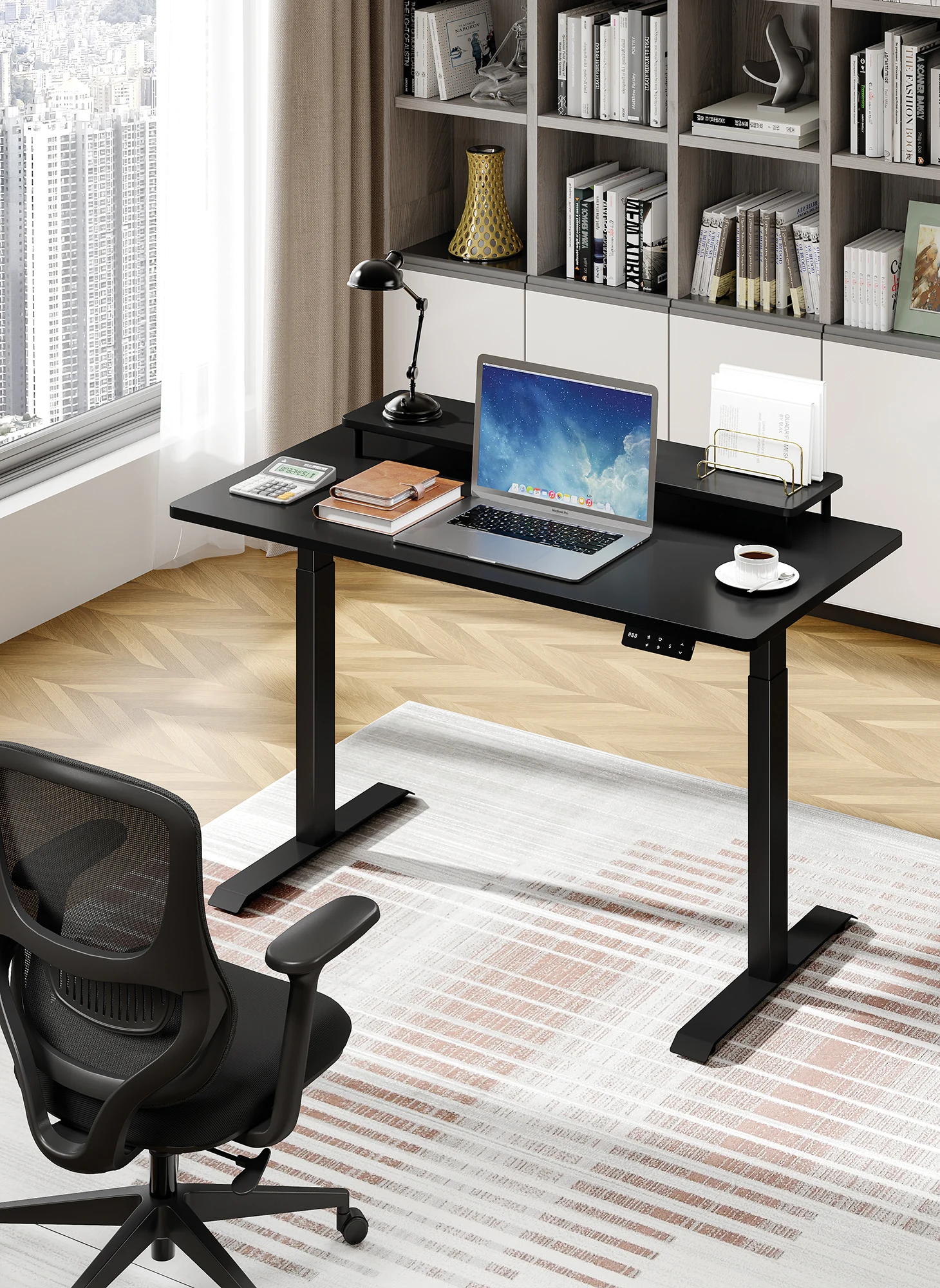
Record the setup before anyone pushes the desk or reads an instrument. Start with the desk or frame SKU, top part/version, and relevant revision. Record assembly to applicable instructions, foot or leveler adjustment, and floor type and condition. A result from an unspecified showroom floor is not comparable procurement evidence.
Record the Floor, Assembly, and Configuration
Capture top dimensions, documented mass, attachment method, and installed accessories. A monitor arm clamp, PC mount, cable tray, screen, speakers, or console can matter. OSHA treats placement of computer components and accessories as part of an appropriately adjusted workstation. OSHA’s desk guidance
Keep room planning separate from the test file. The gaming desk size planning guide can help define the intended footprint; the stability record needs to name the desktop actually used.
Define the Force and Measurement Method
The test plan should identify the force or action, its direction and location, the observation or measurement point, the method, and the approved acceptance criterion. Identify the operator and how repetitions or deviations are recorded. Do not invent a universal push value or wobble threshold; those details belong to the approved procedure.
If a file says only “passed stability test,” request the configuration sheet and method before using it in a comparison.
BUYER'S GUIDE
How to Observe Wobble at Different Desk Heights
Test height is a condition, not a footnote. If evidence is needed at more than one height, agree them in advance and record a separate observation or measurement at each. Do not merge results into an unqualified “stable” conclusion.
Separate Front-to-Back and Side-to-Side Responses
Front-to-back and side-to-side are different directions. Identify the direction evaluated, force location, and point where movement was observed or measured. “Does not wobble” is incomplete without the load, height, and checking method.
BIFMA’s X5.5 revision notice identifies attention to height-adjustable desk/table surface testing, but the public notice does not provide a universal consumer wobble threshold. Ask which height conditions a supplier’s record covers rather than borrowing a result from another model or height. BIFMA’s X5.5 revision notice
Keep the Observation Criteria Consistent
A qualitative check can be useful when the same observers, directions, setup, and recording language are used. Instrumented measurement adds precision only when the point, unit, device, and applicable control or calibration information are recorded. Do not compare a showroom demonstration with an instrumented result as the same metric.
Label each item plainly as a supplier statement, internal test, or independent laboratory result. The label is not a ranking; it tells the next reviewer what evidence they are reading.
BUYER'S GUIDE
How to Verify Desk Load Capacity Without Mixing Test Conditions
A gaming desk load-capacity claim is comparable only when the rated condition is named. Ask whether the figure applies to the whole assembled desk, frame, work surface, or another configuration. Then verify whether the desktop is included, where the load was placed, the desk height, and the criterion used. A capacity figure without those conditions is a supplier question, not a number to drop into a buying sheet.
Distributed load and concentrated load describe different arrangements. In its published interpretation for distributed loads in X5.5 unit-strength tests, BIFMA says the loading materials must allow a tabletop to deflect and follow that deflection; they must not bridge the surface and add rigidity. BIFMA’s distributed-load interpretation This is not a general capacity formula, but it shows why the word “distributed” alone is incomplete.
| Verification Field | What to Record | Action if Missing |
|---|---|---|
| Product identity | Desk/frame SKU, desktop version, report date, file version | Request model-specific identification |
| Assembly and environment | Assembly state, floor, test height, plan version | Do not assume the result applies |
| Load condition | Distributed or concentrated, location/distribution, top included or excluded | Do not compare to a differently defined rating |
| Stability method | Force direction/location, observation point, method, repetitions | Request the method before using the claim |
| Acceptance and evidence | Approved criterion, deviations, outcome, report/data-sheet number, sign-off role | Mark pending verification, not passed |
Do not derive a generic “safe operating margin” from a published capacity number. The intended limit and any evidence relationship must be confirmed for the exact model and contract configuration.
BUYER'S GUIDE
Include Monitor Arms and Gaming Accessories in the Test Configuration
Verify Monitor Arms and Accessory Attachments
Test the setup a buyer intends to approve, not a bare desk with a similar total mass. A monitor arm and screen may concentrate load at a clamp or grommet and move it away from the desktop center. A PC mount, speakers, lighting, camera arm, or under-desk accessory may also change the configuration. Record each accessory, attachment method, attachment point, and whether it is supplied with the desk, customer-added, or outside the test scope.
BIFMA’s 2021 X5.5 update added an informative test addressing stability of units with monitors attached. That supports asking for monitor-attached evidence; it does not show that every gaming desk and arm combination is covered. BIFMA’s X5.5 revision notice
Confirm installation restrictions in the applicable instructions. A clamp compatible with one desktop thickness, edge profile, or reinforcement layout may not be compatible with another. Do not infer compatibility from a lifestyle image or generic desk category.
BUYER'S GUIDE
What Should a Gaming Desk Stability and Load Test Report Include?
A useful report connects a result to an identifiable product, method, criterion, and review record. Request the exact SKU or sample identity; frame and desktop versions; desktop size; assembly state; floor; height; load type and placement; accessories; force direction; measurement or observation method; acceptance criterion; results; deviations; report date; and responsible sign-off.
For a BIFMA conformance claim, ask for the standard and revision year, product coverage, and responsible entity’s declaration. BIFMA PC-2023 says claims require formal supporting records, representative production products, controlled changes, and maintained test reports. It also says BIFMA does not approve, certify, or test products, so generic “BIFMA certified” wording should not replace a model-specific declaration and evidence file. BIFMA PC-2023
Match the Exact Product and Market Configuration
If the order will use a different desktop size, material, mounting point, frame revision, or market configuration, ask whether that change was evaluated and whether further evidence is needed. A report does not automatically transfer across a product family because the marketing name is similar.
Separate Published Claims From Test Evidence
A data sheet can state a supplier’s published claim. A test record can document a procedure. An independent report can identify a laboratory and scope. Keep these in separate procurement columns. When no reviewable file is supplied, record “not provided” or “pending verification,” not “passed.”
BUYER'S GUIDE
Compare Supplier Claims Only When the Test Conditions Match
Align conditions before comparing numbers. Create one row per shortlisted desk and compare identity, height, top, assembly, floor, load definition, accessories, method, criterion, and evidence type. Mark the row comparable only where those fields match the purchasing decision. Mark differences as “not directly comparable” and missing fields as “evidence gap.”
BIFMA’s conformance guidance says test plans should use engineering judgment and representative, potentially worst-case products, and that product changes can require a retesting determination. BIFMA PC-2023 Ask why the tested configuration represents the desk on the purchase list; do not make that assumption.
A competitor’s public specification may be saved as market information with its source and access date. It is still the competitor’s published statement, not evidence for another desk. For broader frame-selection context, use the standing desk frame buyer’s guide.
If a shortlist includes both fixed-height and electric platforms, the fixed-height vs. electric height-adjustable gaming desks comparison can help separate platform-selection questions from configuration-specific test evidence.
BUYER'S GUIDE
A Buyer’s Checklist: What to Request Before Approving a Desk
Final Buyer Checklist
Approve the evidence chain, not just the headline claim. Freeze the intended configuration, request matched specifications and conditions, then decide whether evidence is comparable, needs retesting, or leaves the decision open.
- Which desk, frame, desktop, and accessory configuration does the claim cover?
- What does the load capacity include, and how were the load type and placement defined?
- What floor, height, assembly state, force direction, and method were used for stability evidence?
- What criterion applied, who signed the record, and what is the report version?
- What market and product revision does the evidence cover, and what changes require reconfirmation?
Players can check the exact product name or SKU, desktop/accessory configuration, and available assembly or use instructions. If a monitor arm or concentrated accessory load is planned, ask whether that installation is included or remains to be confirmed. When the evidence request becomes a formal supplier comparison, use an office furniture RFQ and quotation comparison.
For broader product-selection and supplier-sourcing questions outside the test file, see the gaming desk buying and sourcing guide.
Request Model-Specific Specifications and Documented Test Conditions for the Shortlisted Desk. Share the shortlisted desk model, configuration, and target market to request model-specific specifications and documented test conditions for review. Contact GB Ergonomic with the intended desktop, frame, accessories, load arrangement, and evidence you need to verify.
FREQUENTLY ASKED QUESTIONS
Questions to settle before you request a quotation.
How Do You Test a Gaming Desk for Wobble?+
Identify the configuration, record the floor, assembly state, height, load placement, force direction, and observation or measurement method, then follow a pre-approved procedure. Record each direction and height separately. A generic push test can identify a question to investigate, but it does not support a transferable conclusion.
Does a Higher Load Rating Mean a Gaming Desk Is More Stable?+
No. Verify the rating definition, load arrangement, desktop inclusion, and criterion on one track. Verify height, force direction, and observation or measurement method on another. Neither result should be used to infer the other.
Should a Monitor Arm Be Included in a Desk Load Test?+
Include it when the intended configuration uses it and evidence is needed for that setup. Record the arm, screen, attachment method, clamp or grommet location, and whether it is supplied or customer-added. If it was excluded, compatibility and performance remain to be confirmed.
What Should I Ask a Supplier for When Comparing Desk Capacity Claims?+
Ask for the exact SKU/configuration, load definition and placement, desktop inclusion, test height and plan, acceptance criterion, and a dated, signed record or responsible declaration. If another supplier uses different conditions, mark the claims not directly comparable rather than force a ranking.
RELATED BUYER GUIDES
Continue with the next practical question.
Each guide below develops the product, evidence or commercial question that naturally follows this one.
GAMING DESKS
Gaming Desks: A Buyer and Sourcing Guide for Brands, Retailers, and Players
Turn a gaming-desk concept into a clearer assortment, configuration and supplier discussion.
GAMING DESKS
How to Choose a Gaming Desk Size for Your Room, Monitors, and Setup
Use a room-first approach to choose desk width, depth, monitor space and practical clearance.
GAMING DESKS
Fixed-Height vs Electric Height-Adjustable Gaming Desks
Compare fixed-height and electric gaming desks by fit, features, complexity, and servicing. Verify each model’s specifications and regional power options.
READY TO MAKE A MORE INFORMED DECISION?
Discuss A Gaming Desk Evidence Question
Share the product configuration, equipment plan, intended use and open documentation questions. GB Ergonomic can discuss the information that needs to be aligned before a sourcing decision.
Get a focused responseSOURCES AND FURTHER READING
The references below support the standards, procurement and workplace context in this guide. Requirements should always be verified against the exact product configuration, destination market and commercial arrangement.
- ISO 19682:2023 — Furniture: Tables Test Methods for Stability, Strength and Durability
- BIFMA Standards Descriptions
- BIFMA Revises Desk and Table Products Standard
- BIFMA PC-2023 Product Conformance Requirements
- BIFMA Desk and Table Distributed Load Interpretation
- OSHA Computer Workstations eTool: Desks
ABOUT THIS GUIDE
Written by the GB Ergonomic Editorial Team and reviewed on November 2, 2026. This is an educational buyer resource, not legal, certification or regulatory advice. Product evidence, standards and commercial terms should be confirmed for the exact configuration and destination market.