
BUYER'S GUIDE
What Does “Landed Cost” Mean for an Office Furniture Order?
Landed cost is a working total for a defined order arriving at a defined point: the quoted product/order scope plus verified logistics and destination charges that apply to that shipment. It prevents a factory price from being mistaken for the full acquisition cost.
The definition must name the configuration, quantity, destination, and delivery arrangement. A different mechanism, tabletop, carton, shipment method, or named delivery point is a different cost basis.
The International Chamber of Commerce describes Incoterms® as eleven trade terms that clarify tasks, costs, and risks in delivery between seller and buyer. Record the selected rule, its version, and the named place or port; then keep the order’s own written inclusions and exclusions beside it. A trade-term abbreviation should not be used as a substitute for reviewing the commercial documents. ICC’s Incoterms® overview
A practical cost view follows the shipment from quote to destination: product/order scope, transport, import and clearance inputs, then delivery to the agreed point. It organizes questions; it does not decide who bears an unreviewed cost.
BUYER'S GUIDE
Start With a Like-for-Like OEM Quote Before Comparing Costs
A like-for-like OEM quote has the same item definition behind every amount. Before comparing suppliers or scenarios, lock the configuration, file revision, SKU mix, quantity tier, finish or material requirements, accessories, branding, packaging, and destination. If one response assumes a different carton, tabletop, fabric, label, or component, flag it as a deviation instead of treating it as an equivalent price.
For a wider stage-by-stage view, the office furniture OEM procurement process can help place quotation review within the broader purchase decision. This article stays with the cost fields that need to remain comparable after a quote is received.
Align Product Scope, Quantity, and Packaging
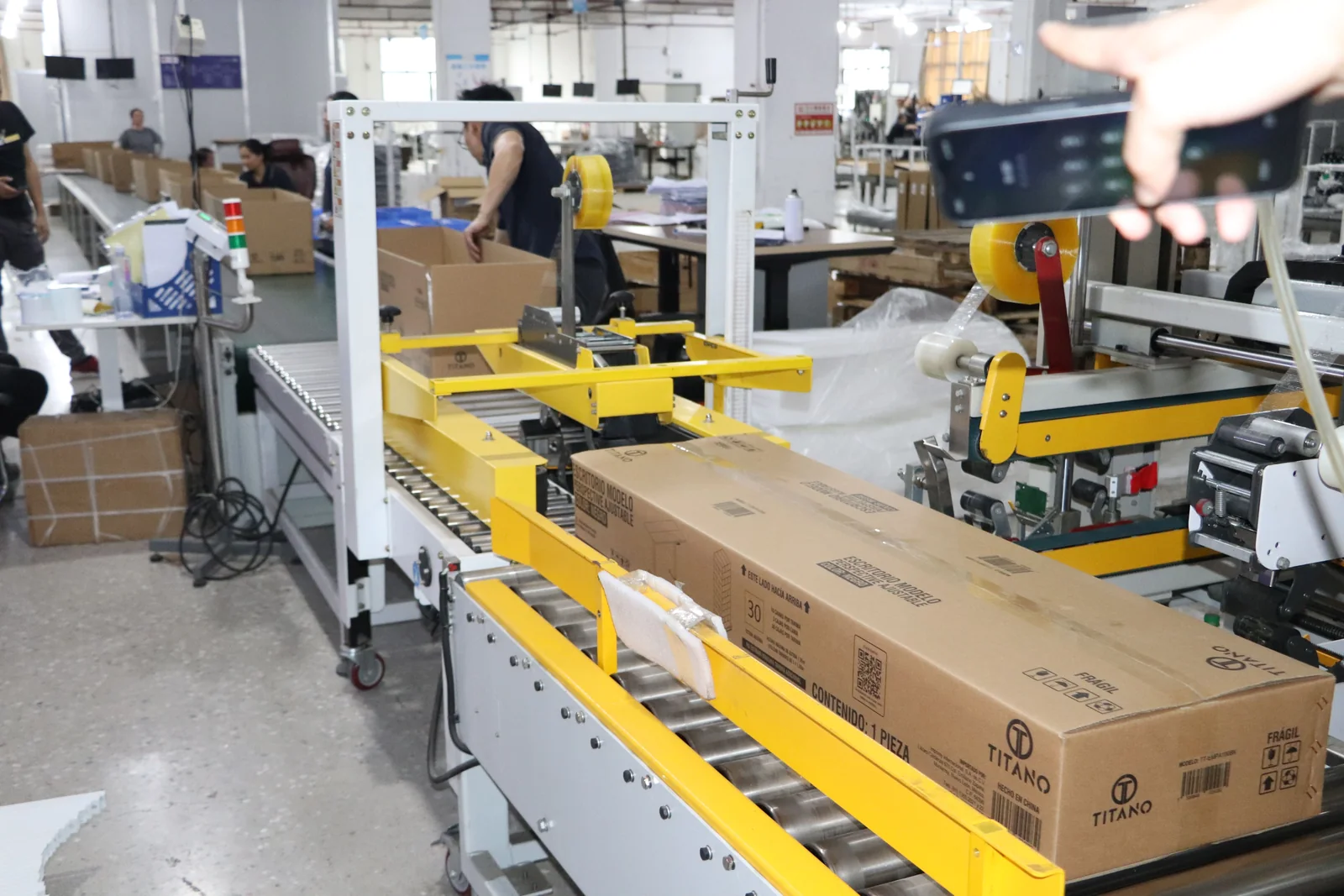
Write the unit of comparison plainly: a specified SKU/configuration and quantity under a named packaging assumption. Do not assume that a sample, development, tooling, artwork, or special pack-out item is included. If relevant, request a separate line, currency, date, and scope statement.
Record Currency, Quote Date, and Exclusions
Preserve the currency, quote date, stated validity, conversion method if used, and exchange-rate date. Keep discounts, payment assumptions, delivery basis, and exclusions as their own fields. A blank exclusion field is not evidence that nothing is excluded.
For a more detailed request-and-response structure, use the office furniture RFQ and quotation comparison guide. It addresses the RFQ fields; the worksheet below focuses on turning a controlled quote into a destination-specific cost view.
BUYER'S GUIDE
Separate Factory Price From Every Other Cost Component
The safest worksheet does not collapse costs too early. Separate the quoted product/order scope from each potential shipment and destination category, then identify the source, date, responsibility, and status for each one. Some fields will be not applicable; some will be pending. Neither status should be silently converted into a zero amount.
| Landed Cost Comparison Worksheet — Fields Only | What to Record | Status to Use |
|---|---|---|
| Supplier / quote version | Supplier name, quote number or version, and source file | Verified / Pending |
| SKU and configuration | Item identity, revision, finish, accessories, and packaging assumption | Verified / Pending |
| Quantity / order scope | SKU mix, units, and any price break or separate item | Verified / Pending |
| Currency / quote date / validity | Currency, issue date, expiry if stated, and conversion basis if used | Verified / Pending |
| Factory price | Amount and exact scope; do not add unquoted items | Verified / Pending |
| Packaging / one-off items | Whether applicable, included, excluded, optional, or separately priced | Verified / Pending / N/A |
| Freight / insurance | Provider, route, shipment basis, quote date, and stated scope | Verified / Pending / N/A |
| Clearance / port charges | Service provider, named point, and responsible confirmer | Verified / Pending / N/A |
| Duties / taxes | Broker-reviewed, market-specific input and review date | Verified / Pending / N/A |
| Inland delivery | Endpoint, provider, scope, and date | Verified / Pending / N/A |
| Included / excluded / owner | Written scope statement and party responsible for checking it | Verified / Pending |
| Assumption / open issue | Missing facts, next action, owner, and due date if used internally | Open |
These are categories, not a claim that every order has every charge. A supplier may price packaging while a forwarder supplies route-specific transport; another order may need a separate review of port handling, delivery appointment, storage, or special services. Compare only where field, scope, source, and timing match.

BUYER'S GUIDE
Which Freight, Insurance, and Destination Inputs Need Verification?
Freight and insurance figures should be tied to the shipment they describe. Ask the provider to state origin and destination, mode, shipment basis, cargo and packaging information used, handover point, quote date, validity, and included or excluded services. A number without its route and assumptions is not transferable.
A different collection point, port, delivery address, packaging volume, timing, or service can change the priced scope. Do not use generic rates, transit times, insurance rates, or port charges as order facts.
Where the proposed export packaging uses raw-wood packaging material or dunnage, assign someone to confirm the relevant destination requirement and evidence. The IPPC’s ISPM 15 covers raw-wood packaging and dunnage in international trade, while excluding processed wood such as plywood from that standard’s coverage. That distinction is a packaging review prompt, not proof that a given carton or shipment needs a particular treatment. IPPC, ISPM 15
BUYER'S GUIDE
How Should Buyers Handle Duties, Taxes, and Customs Charges?
Treat duties, taxes, and customs charges as destination-specific review items, not standard percentages to add to a furniture quote. The applicable input can depend on the product description, materials and construction, origin, valuation, current rules, transaction facts, importing market, and review date.
For U.S. imports, CBP says importers should be able to describe the merchandise fully, including origin, composition, intended use, and pricing/payment information when seeking classification assistance. CBP also states that an importer of record remains ultimately responsible for entry documentation and applicable duties, taxes, and fees, even when using a customs broker. CBP’s importer guidance
The U.S. International Trade Commission publishes the Harmonized Tariff Schedule, which sets out tariff rates and statistical categories for U.S. imports. It is a starting point for a current U.S. review, not a basis for assigning a code or rate to a particular furniture order here. U.S. ITC Harmonized Tariff Schedule
A material and destination check may also affect what documentation needs review. For example, EPA’s TSCA Title VI program covers certain composite-wood panels and finished goods containing them when supplied or imported in the United States. Whether that applies must be confirmed for the exact material configuration and current rule; do not assume it from a product category or image. EPA composite-wood standards
BUYER'S GUIDE
Compare Supplier Quotes Using a Cost-and-Scope Matrix
A matrix makes it harder for a low headline figure to hide a different scope. Make one row per quote version or scenario. Before comparing totals, check configuration, quantity, package, currency, quote date, delivery basis, named location, and destination inputs. If they do not match, the totals are not directly comparable.
| Comparison Point | Supplier / Scenario A | Supplier / Scenario B | Buyer Check |
|---|---|---|---|
| Exact SKU/configuration and revision | Match or flag deviation | ||
| Quantity and pack-out | Match requested basis | ||
| Currency, quote date, and validity | Preserve source timing | ||
| Factory price and included scope | Do not infer missing items | ||
| Trade rule, version, and named place | Confirm written basis | ||
| Freight / insurance source and date | Match route and shipment assumptions | ||
| Clearance, duties, and taxes | Obtain destination review | ||
| Inland delivery endpoint and scope | Confirm final point | ||
| Open issues and cost owner | Assign next action |
Cost differences do not, by themselves, prove a quality difference or show that one supplier is more reliable. They may reflect a different configuration, packaging, destination basis, service scope, date, or unrecorded assumption. If design and development scope is causing the difference, review OEM vs ODM office furniture separately rather than using a cost total to settle that commercial question.
BUYER'S GUIDE
Build a Landed Cost Worksheet—Without Treating It as a Universal Calculator
Use a formula structure, not a universal rate card:
Estimated total for the defined shipment = quoted product/order scope + verified applicable logistics and destination charges
Add an item only when it is applicable, sourced, dated, and reviewed at the same scope as the order. Version the estimate so the team can see what changed. Record the source, rate date, and owner for any currency conversion. Label an unconfirmed amount pending rather than entering zero.
The worksheet organizes decisions; it does not replace the forwarder, broker, importer of record, insurer, tax adviser, or destination authority. Show who confirms each category and when its source expires.
BUYER'S GUIDE
Questions to Resolve Before Approving an OEM Purchase
Before approval, a buyer should be able to answer these questions in writing:
- Does every quote cover the same SKU configuration, revision, quantity, branding, accessories, and packaging?
- Are currency, quote date, validity, trade rule, version, and named place recorded?
- Does each inclusion, exclusion, option, and one-off item have a written source?
- Do freight and insurance inputs match the route, shipment basis, and current timing assumptions?
- Has the appropriate destination specialist reviewed classification, duties, taxes, customs charges, and relevant import requirements for this order?
- Are final delivery scope and any open packaging or compliance questions assigned to an owner?
- Are pending amounts clearly separated from verified totals?
Do not select only on the surface-level unit price. First close scope gaps or put them into a written pending list. Confirm MOQ, samples, approval stages, and change control as program-specific quote assumptions.
Request a Scoped Quote or Procurement Review From GB Ergonomic
Share your target product configuration, order stage, and destination market with GB Ergonomic to request a scoped quote or procurement review. Any quotation, cost input, and applicable terms must be confirmed for the specific order and destination.
FREQUENTLY ASKED QUESTIONS
Questions to settle before you request a quotation.
What Is Included in the Landed Cost of Office Furniture?+
For a defined order, the worksheet may consider the quoted product/order scope and applicable freight, insurance, clearance, duties or taxes, and inland delivery. It is not a fixed checklist. Confirm whether each item applies, is included, excluded, or quoted by another party under the actual contract and route.
Does an Office Furniture OEM Quote Include Shipping and Import Duties?+
There is no universal answer. Ask the supplier to state the currency, delivery basis, named place, and every inclusion and exclusion in writing. Confirm shipping with the relevant provider and obtain destination-specific duty, tax, and clearance input from the appropriate broker or specialist.
How Can Importers Compare Two Furniture Supplier Quotes Fairly?+
Align the SKU configuration, quantity, packaging, destination, route basis, currency, and quote date first. Then list each cost category, source, inclusion, exclusion, and open issue. A charge that is unknown or based on another scenario should remain pending rather than be treated as zero.
Can I Use a Landed Cost Calculator to Estimate Furniture Import Costs?+
A worksheet can organize an estimate, but it cannot replace order-specific inputs. This article provides fields and a comparison method, not an online calculator. Verify product scope, current logistics, and destination customs and tax inputs with the responsible parties before relying on a total.
RELATED BUYER GUIDES
Continue with the next practical question.
Each guide below develops the product, evidence or commercial question that naturally follows this one.
OEM PROCUREMENT
B2B Office Furniture OEM Procurement: From RFQ to Delivery
Use stage gates to move from a controlled RFQ to sample approval, inspection and a clearer handover.
OEM PROCUREMENT
How to Write an Office Furniture OEM RFQ and Compare Quotations
Make supplier quotes comparable by defining specifications, packaging, destination and decision criteria.
OEM PROCUREMENT
Office Furniture OEM MOQ, Sampling and Approval: A Buyer’s Guide
Plan office furniture OEM MOQ, sampling, revisions, pre-production approval, signoff, and change control. Confirm terms for your exact product and market.
READY TO MAKE A MORE INFORMED DECISION?
Request A Scoped Quote Or Procurement Review
Share the target product configuration, order stage and destination market. GB Ergonomic can discuss quotation scope; applicable cost inputs and commercial terms must be confirmed for the exact shipment.
Get a focused responseSOURCES AND FURTHER READING
The references below support the standards, procurement and workplace context in this guide. Requirements should always be verified against the exact product configuration, destination market and commercial arrangement.
- International Chamber of Commerce — Incoterms® Rules
- U.S. Customs and Border Protection — Tips for New Importers and Exporters
- U.S. International Trade Commission — Harmonized Tariff Schedule
- U.S. Environmental Protection Agency — Formaldehyde Emission Standards for Composite Wood Products
- International Plant Protection Convention — ISPM 15: Regulation of Wood Packaging Material in International Trade
ABOUT THIS GUIDE
Written by the GB Ergonomic Editorial Team and reviewed on November 2, 2026. This is an educational buyer resource, not legal, certification or regulatory advice. Product evidence, standards and commercial terms should be confirmed for the exact configuration and destination market.